How to Calculate the True Landed Cost of Imported Inventory Before It Reaches Your Fulfilment Centre
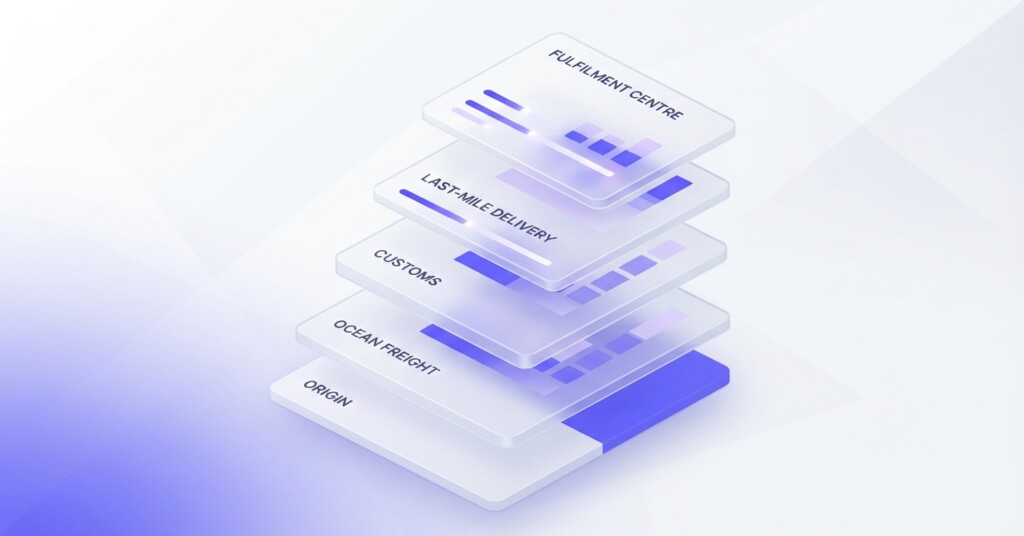
Most e-commerce operators know their supplier invoice price. Far fewer know their true landed cost — the actual cost per unit by the time inventory sits inside their fulfilment centre, ready to pick and ship. That gap between invoice price and landed cost is where margin quietly disappears, and where multi-channel pricing decisions go wrong.
If you are selling across Shopify, Shopee, Lazada and TikTok Shop simultaneously, you are likely using the same SKUs across channels with different fee structures, different promotional requirements and different margin expectations. Getting your landed cost wrong means every gross profit and contribution margin figure you calculate downstream is built on a flawed foundation.
This article walks through every component of landed cost, how to calculate it on a per-unit basis, and how to use that number to make better pricing, purchasing and channel allocation decisions.
Why Invoice Price Is Not Your Cost
When you place a purchase order with a supplier in China, Vietnam or any other manufacturing market, the price on the invoice is typically your ex-works (EXW) or free-on-board (FOB) price. That number reflects what the supplier charges you for the goods at origin. It does not reflect what it costs to get those goods into your warehouse.
Consider a practical example. You order 1,000 units of a skincare product from a supplier in Guangzhou at USD 4.20 per unit. Your total invoice is USD 4,200. By the time those units arrive at your fulfilment centre in Singapore or Kuala Lumpur, the real cost per unit might be USD 6.80 or more — a 62% increase. If you set your selling prices and calculate margins based on USD 4.20, every margin report you produce is overstating your profitability.
The Components of True Landed Cost
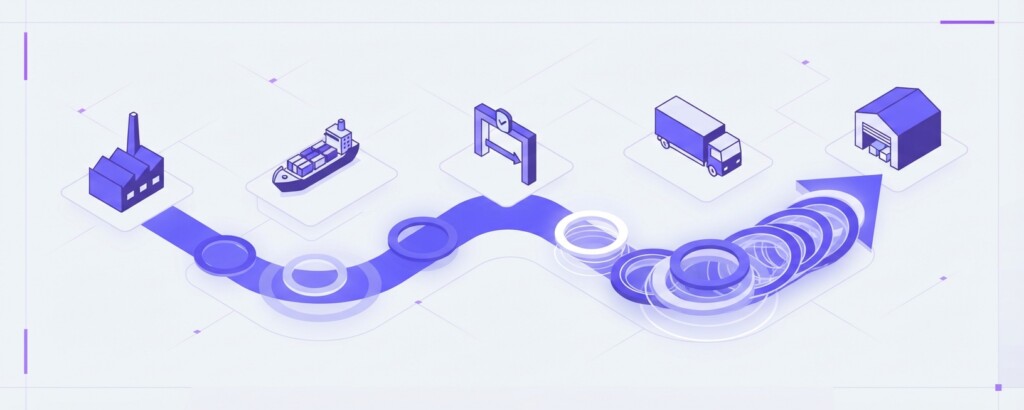
Landed cost is the sum of every cost incurred to move inventory from your supplier to your fulfilment centre. The major components are listed below, though the weight of each will vary depending on your product category, origin country, shipping method and destination market.
- Supplier invoice price (ex-works or FOB)
- Freight and shipping costs (sea, air or courier)
- Origin charges (inland haulage, export customs, documentation)
- Import duties and customs tariffs
- Non-recoverable Goods and Services Tax or VAT on imports
- Customs brokerage and clearance fees
- Destination port charges and terminal handling
- Inland delivery from port to warehouse or fulfilment centre
- Quality inspection fees
- Currency conversion costs and bank charges
- Cargo insurance
- First-mile fulfilment centre receiving and put-away fees
A common mistake is treating freight as the only additional cost on top of the supplier price. In practice, customs duties, non-recoverable import taxes, brokerage fees and destination handling can collectively add more to your per-unit cost than the freight itself.
Worked Calculation: Landed Cost Per Unit
Let us build a full landed cost calculation using a realistic example. You are importing 1,000 units of a premium candle set from a supplier in Shenzhen, shipping to a third-party fulfilment centre in Singapore via sea freight LCL (less-than-container load). For non-GST-registered businesses, import GST cannot be claimed back and must be included in landed cost.
| Supplier invoice price (1,000 units × USD 4.20) | USD 4,200.00 |
| Sea freight — LCL Singapore | USD 480.00 |
| Origin charges (export docs, inland haulage Shenzhen port) | USD 120.00 |
| Import duty (Singapore, 0% for this HS code) | USD 0.00 |
| GST on import value + freight (9% × USD 4,680) | USD 421.20 |
| Customs brokerage and clearance fees | USD 95.00 |
| Destination port handling and terminal fees | USD 75.00 |
| Inland delivery — port to fulfilment centre | USD 60.00 |
| Cargo insurance (0.3% of invoice value) | USD 12.60 |
| Quality inspection fee | USD 80.00 |
| FX conversion loss (est. 1% on invoice) | USD 42.00 |
| 3PL receiving and put-away (USD 0.15 per unit) | USD 150.00 |
| Total Landed Cost (all-in) | USD 5,735.80 |
| Landed Cost Per Unit | USD 5.74 |
Your supplier invoice suggested a unit cost of USD 4.20. Your true landed cost is USD 5.74 — a 36.7% increase. This is the number you must use in every margin and profitability calculation going forward.
How Landed Cost Affects Your Channel Margins
Once you have a reliable landed cost figure, you can calculate gross profit and contribution margin accurately across each of your sales channels. Using the candle set example above, assume you sell this product at SGD 29.90 (approximately USD 22.30) across four channels. Each channel has different platform fees, commission structures and fulfilment costs.
| Cost or Margin Item | Shopify (DTC) | Shopee | Lazada | TikTok Shop |
|---|---|---|---|---|
| Selling Price (USD) | 22.30 | 22.30 | 22.30 | 22.30 |
| Landed Cost Per Unit (USD) | 5.74 | 5.74 | 5.74 | 5.74 |
| Platform Commission (%) | — | 3.0% | 4.0% | 5.0% |
| Platform Fee (USD) | 0.00 | 0.67 | 0.89 | 1.12 |
| Payment Processing (USD) | 0.65 | 0.00 | 0.00 | 0.00 |
| Shipping Subsidy / Voucher (USD) | 0.00 | 1.50 | 1.20 | 2.00 |
| Pick, Pack & Fulfilment (USD) | 1.80 | 1.80 | 1.80 | 1.80 |
| Last-Mile Delivery (USD) | 2.20 | 2.20 | 2.20 | 2.20 |
| Total Variable Cost (USD) | 10.39 | 11.91 | 11.83 | 12.86 |
| Contribution Margin (USD) | 11.91 | 10.39 | 10.47 | 9.44 |
| Contribution Margin (%) | 53.4% | 46.6% | 47.0% | 42.3% |
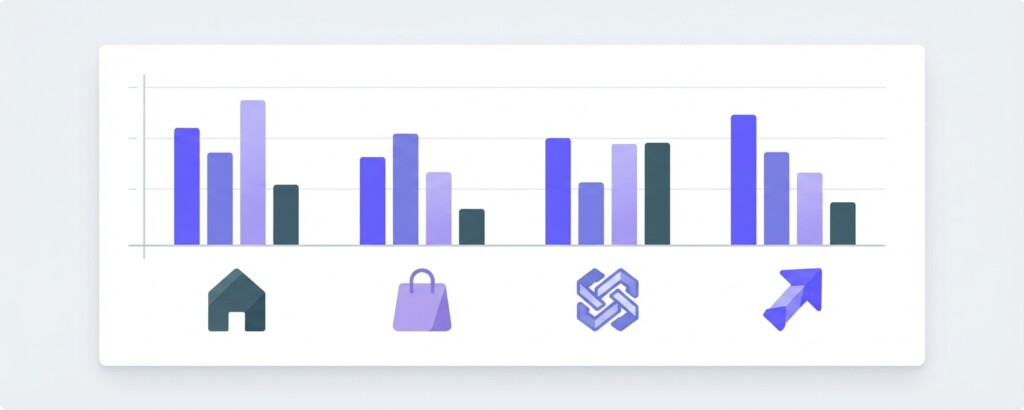
This table reveals something important: marketplace channels such as TikTok Shop, Shopee and Lazada, despite generating the same revenue per unit, deliver meaningfully lower contribution margins than your direct Shopify store. A business that does not calculate landed cost properly — and instead uses invoice price — would understate its true costs, overstate margins across all channels, and potentially scale unprofitable channel activity.
Common Errors That Distort Your Landed Cost
Three errors consistently inflate apparent margins: (1) for non-registered businesses, omitting non-recoverable GST or VAT paid on imports from landed cost (note that GST-registered businesses recover import GST as input tax, so it should not be included in COGS); (2) recording freight as a fixed overhead rather than allocating it per SKU; and (3) ignoring currency conversion losses when paying suppliers in USD while your books are in SGD, MYR or another currency. Each of these causes your product-level profitability reports to be misleading.
Allocating Shared Freight Costs Across SKUs
When you ship multiple SKUs in the same container or LCL consignment, you need a method to allocate the total freight and shared charges across each product. There are two practical approaches:
- Weight or volume-based allocation: Divide shared costs proportionally by the gross weight or cubic metre volume each SKU occupies in the shipment. This is the most accurate method for freight.
- Value-based allocation: Divide shared costs proportionally by each SKU’s share of total invoice value. Simpler to calculate but can distort results if you are shipping a mix of high-value and low-value items.
- Hybrid allocation: Use weight-based allocation for freight and volume-based charges, and value-based allocation for insurance and duty (since duty is typically assessed on declared value).
For most e-commerce importers, a weight-based allocation for freight and a value-based allocation for duties and non-recoverable taxes gives the most accurate per-SKU landed cost without requiring complex logistics software.
Building a Landed Cost Template Into Your Buying Process
Landed cost calculation should happen before you place a purchase order, not after inventory arrives. This allows you to set minimum selling prices with confidence, reject orders that cannot achieve target margins and negotiate with suppliers or freight forwarders based on the full cost picture.
Build a simple spreadsheet template with the following inputs for every new product or reorder: supplier quote, expected order quantity, freight quote by weight and volume, duty rate from your HS code lookup, local tax rate, brokerage estimate, insurance rate and 3PL receiving fee. Run the calculation before confirming any order. If the resulting landed cost per unit does not leave adequate margin across your primary sales channels, you have three options: negotiate a lower supplier price, reduce order frequency to lower per-unit freight, or adjust your channel pricing strategy.
Using Landed Cost Data in Your Analytics Stack
Once you have accurate landed cost figures, they need to flow into your product and channel performance reporting. This is where many businesses hit a practical barrier: their Shopify, Shopee, Lazada and TikTok Shop sales data sits in separate dashboards, and their landed cost data lives in a spreadsheet. Reconciling these manually is slow and error-prone.
Platforms like BrizoMarket are designed for this scenario — connecting multi-channel sales data with your cost inputs so that gross profit, contribution margin and COGS are calculated consistently at the SKU and channel level. Rather than maintaining separate reports for each platform, you can view true margin performance across all channels using the same landed cost baseline, which is where the real analytical value comes from.
Practical Next Steps
- Pull your last three purchase orders and recalculate landed cost using the full component list above. Compare the result to the unit cost you have been using in margin calculations.
- Build or update your landed cost template before your next buying cycle. Make it a mandatory step in your purchase order approval process.
- Identify your HS codes for all imported SKUs and confirm the applicable import duty rate for your destination market. Duty rates vary significantly by product category and origin country.
- Decide on your freight allocation method (weight-based, value-based or hybrid) and apply it consistently across all purchase orders.
- Update your COGS figure in your channel performance reports to reflect true landed cost, then recalculate contribution margin for each channel and each top SKU.
- Review your minimum selling prices on each platform — Shopee, Lazada and TikTok Shop in particular — to ensure they still deliver acceptable margins once accurate costs are applied.
- If you are managing more than 50 active SKUs or three sales channels, consider whether a multi-channel analytics tool can automate this reconciliation reliably.
The single most impactful financial improvement most e-commerce operators can make is not to find a new channel or run a better promotion — it is to calculate their true cost of goods accurately. Every downstream decision about pricing, channel strategy and product range depends on getting this number right.
Landed cost is not a one-time calculation. Freight rates move, duty rates change, supplier prices shift and your 3PL fees may be renegotiated. Review your landed cost assumptions for each major SKU at minimum every quarter, and recalculate whenever you source a new supplier or change shipping method. Treat it as a live input to your business model, not a historical footnote.
See Your True Margin Across Every Channel
BrizoMarket helps e-commerce operators connect multi-channel sales data with accurate cost inputs — so your gross profit and contribution margin figures reflect reality, not just your supplier invoice.