How to Attribute Shared Marketing Spend Across Channels When One Campaign Drives Sales on Multiple Platforms

You run a Meta ad campaign promoting your skincare range. Within 48 hours, you see a lift in sales on Shopify, a spike on Shopee, a jump on Lazada, and a burst of orders through TikTok Shop. The campaign clearly worked — but how much of that success belongs to each channel? And more importantly, how do you decide where to reinvest?
This is one of the most practical and underappreciated problems in multi-channel e-commerce. Most operators either assign all the spend to whichever channel their ad account points to, or they throw their hands up and treat marketing as a single undifferentiated cost. Both approaches distort your channel profitability data and lead to poor decisions about where to focus your budget.
This article walks through how to think about shared marketing attribution, which models are actually useful for e-commerce operators, and how to apply them in a way that produces actionable profitability analysis — not just academic accuracy.
Why Shared Attribution Matters for Profitability Analysis
Channel profitability is only meaningful if the costs assigned to each channel are reasonably accurate. When you run a campaign that drives sales across multiple platforms simultaneously, the cost of that campaign is shared — but most reporting tools do not capture this automatically.
If you assign the full campaign cost to Shopify because that is where you linked the ad, your Shopify channel looks expensive and your Shopee, Lazada, and TikTok Shop channels look artificially profitable. You might then cut Shopify spend thinking it is inefficient, when actually it is subsidising performance across your whole business.
The core principle: marketing spend that influences multiple channels should be apportioned across those channels in proportion to the revenue or gross profit it helped generate. Failing to do this makes every downstream profitability calculation unreliable.
Step 1 — Identify Which Campaigns Are Truly Multi-Channel
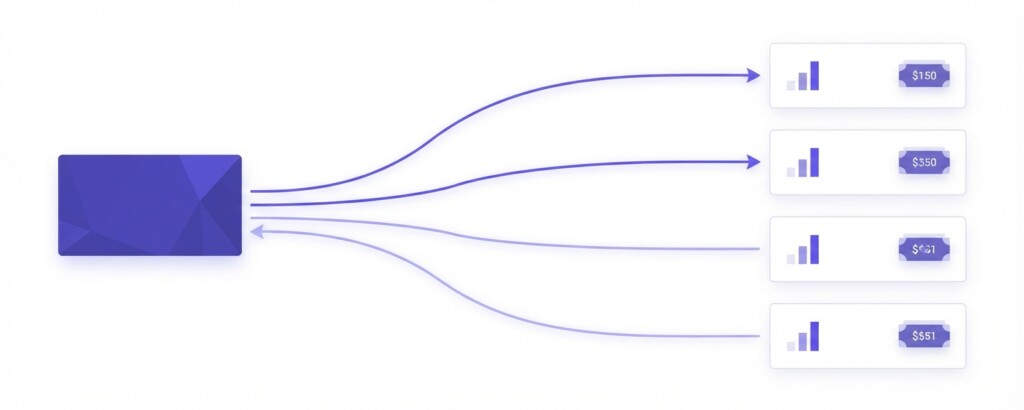
Not every campaign needs shared attribution. A TikTok Shop in-feed ad with a direct product link that only drives TikTok Shop orders is channel-specific and can be attributed directly. The attribution problem arises when brand-level or product-level campaigns run on channels like Meta, Google, or YouTube, where buyers may discover your product on one platform but then purchase wherever they already have an account or prefer to shop.
Start by auditing your campaigns and asking: does this ad link to a single storefront, or does it build awareness that could convert anywhere? Campaigns to flag for shared attribution include Meta brand awareness campaigns, Google Shopping campaigns that surface products across web results, influencer campaigns that mention your brand without a platform-specific link, and email campaigns sent to your full customer base regardless of where they originally purchased.
Step 2 — Choose an Attribution Model That Fits Your Business
There is no single correct attribution model. The right choice depends on your sales cycle, your data maturity, and how different your channels are in terms of margin and customer behaviour. Here are the four most practical models for multi-channel e-commerce operators.
| Model | How It Works | Best For | Key Limitation |
|---|---|---|---|
| Revenue-Proportional | Split spend in proportion to incremental revenue each channel generated during the campaign window | Most operators as a starting point | Does not account for margin differences between channels |
| Gross Profit-Proportional | Split spend in proportion to gross profit contributed by each channel | Businesses with significantly different margins per channel | Requires accurate COGS data per channel |
| Equal Split | Divide spend evenly across all channels that showed a lift | Simple businesses with similar channel sizes | Rarely reflects reality; can mislead |
| Custom Weighted | Assign weights based on channel role (e.g. discovery vs. conversion) | Advanced operators with strong attribution data | Requires more data and judgement to set weights fairly |
For most e-commerce businesses running across Shopify, Shopee, Lazada, and TikTok Shop, the revenue-proportional or gross profit-proportional model gives you a defensible and practical starting point. You can refine over time as your data improves.
Step 3 — Measure the Incremental Lift Per Channel
To apply revenue-proportional attribution, you need to estimate how much each channel benefited from the campaign. The cleanest way to do this is to compare sales during the campaign window against a baseline period on each channel.
For example, suppose you ran a Meta awareness campaign for seven days in March. You compare daily average sales in the two weeks before the campaign to the seven campaign days. The difference is your estimated incremental revenue per channel.
| Shopify — Average daily sales pre-campaign | $1,200 |
| Shopify — Average daily sales during campaign | $1,800 |
| Shopify — Estimated daily incremental revenue | $600 |
| Shopee — Estimated daily incremental revenue | $380 |
| Lazada — Estimated daily incremental revenue | $210 |
| TikTok Shop — Estimated daily incremental revenue | $160 |
| Total daily incremental revenue across all channels | $1,350 |
With these figures, you can calculate each channel’s share of incremental revenue. Shopify receives 44% of the campaign cost, Shopee 28%, Lazada 16%, and TikTok Shop 12%. If the campaign cost $4,200 over seven days, those percentages translate to channel-level marketing cost allocations of $1,848, $1,176, $672, and $504 respectively.
Step 4 — Recalculate Channel Contribution Margin with Shared Costs
Once you have apportioned the marketing spend, you can rebuild your channel profitability analysis with more accurate inputs. Contribution margin at the channel level should reflect revenue, minus cost of goods, minus channel fees, minus the apportioned marketing spend.
The formula is straightforward: Channel Contribution Margin = Revenue − COGS − Platform Fees − Apportioned Marketing Spend. Expressing this as a percentage of revenue gives you a contribution margin rate you can compare across channels and across time periods.
| Channel | Revenue (7 days) | COGS | Platform Fees | Apportioned Ad Spend | Contribution Margin | CM% |
|---|---|---|---|---|---|---|
| Shopify | $12,600 | $5,040 | $378 | $1,848 | $5,334 | 42% |
| Shopee | $8,260 | $3,304 | $826 | $1,176 | $2,954 | 36% |
| Lazada | $4,470 | $1,788 | $536 | $672 | $1,474 | 33% |
| TikTok Shop | $3,200 | $1,280 | $480 | $504 | $936 | 29% |
This table tells you something meaningful: Shopify is your strongest performing channel on this campaign, followed by Shopee. TikTok Shop generated revenue but at the thinnest margin once you account for its share of the campaign. Without the shared attribution, TikTok Shop would have appeared far more profitable than it actually was.
Common Mistakes That Distort Your Attribution
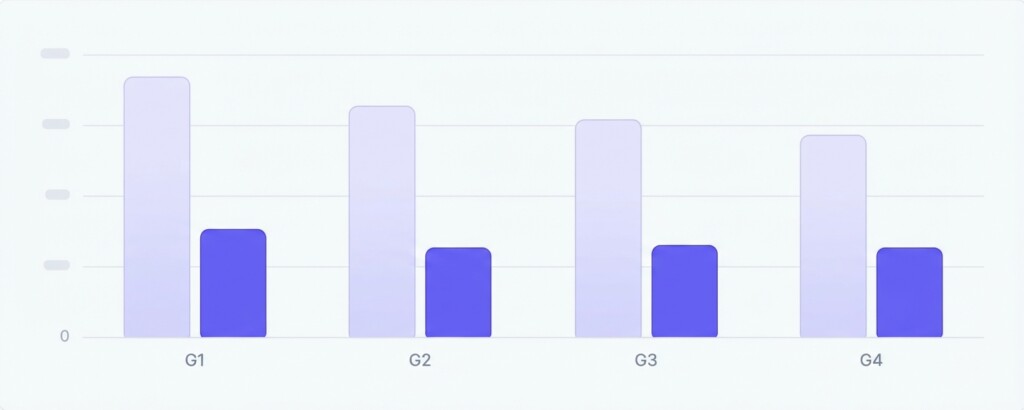
Avoid these four attribution errors that consistently mislead multi-channel operators: (1) Attributing the full campaign cost to the ad platform’s linked storefront only. (2) Ignoring sales lift on channels that were not the primary campaign destination. (3) Using last-click attribution from platform dashboards as your source of truth for cross-channel spend. (4) Running attribution analysis without excluding organic baseline sales from the incremental calculation.
How to Handle Campaigns Without a Clear Baseline
New product launches, seasonal sales, and brand campaigns are harder to baseline because there is no comparable prior period. In these cases, you have two practical options.
The first is to use channel revenue share as a proxy. If Shopify typically accounts for 45% of your total revenue, Shopee 30%, Lazada 15%, and TikTok Shop 10%, you can apportion campaign spend using those percentages as a reasonable approximation. This is less precise but far better than assigning all cost to one channel.
The second option is to hold one channel as a control — run the campaign driving traffic explicitly to Shopify only, and observe whether Shopee and Lazada also lift. If they do, you have evidence that the campaign had a cross-channel effect, and you can estimate its scale from the lift you observe on the non-targeted channels.
Practical Implementation: Building a Shared Attribution Tracker
You do not need sophisticated software to implement this. A structured spreadsheet or a reporting tool that allows you to input campaign costs alongside channel revenue data is sufficient for most businesses.
- Create a campaign log that records the campaign name, total spend, start and end dates, and which channels you believe it influenced.
- For each campaign, record pre-campaign baseline revenue per channel (14-day average works well for most businesses).
- Record actual revenue per channel during the campaign window.
- Calculate incremental revenue per channel and derive each channel’s proportional share.
- Apply those percentages to the campaign spend to get each channel’s allocated marketing cost.
- Feed these allocated costs into your channel profitability report alongside COGS and platform fees.
- Review and document your assumptions so you can audit and refine them in future campaigns.
Tools like BrizoMarket are built to help multi-channel operators consolidate revenue, cost and margin data across platforms like Shopify, Shopee, Lazada and TikTok Shop in a single view. When your channel revenue data is already unified, applying a shared attribution calculation becomes significantly faster because you are working from a single source of truth rather than pulling reports from four different dashboards manually.
What Good Attribution Decisions Actually Look Like
Once you are running shared attribution consistently, the decisions you can make become much clearer. You might discover that a Google Shopping campaign drives meaningful incremental sales on Lazada — meaning your Google spend is actually subsidising Lazada performance, and your ROAS on that campaign is better than Google’s dashboard suggests.
Alternatively, you might find that a particular influencer campaign generates a large TikTok Shop spike but almost no lift elsewhere, making it genuinely channel-specific and justifying a higher cost-per-sale on TikTok Shop alone.
The point is not to achieve mathematical perfection. It is to move from systematically wrong attribution — which distorts every decision — to a reasonable approximation that reflects how your business actually operates. A 90% accurate allocation model applied consistently is worth far more than an exact number that takes months to calculate and arrives too late to act on.
Key Takeaways and Next Steps
Shared marketing attribution is not a theoretical exercise — it is a prerequisite for accurate channel profitability analysis in any business running across multiple platforms. The operators who get this right make better budget allocation decisions, understand which channels are genuinely profitable, and avoid the trap of optimising the wrong metrics.
Start with revenue-proportional attribution using a 14-day baseline comparison. Build a simple campaign tracker. Recalculate your channel contribution margins with apportioned costs at least monthly. Review whether your current view of channel profitability would change materially if you applied shared attribution — in most multi-channel businesses, it will.
If you are spending on brand awareness, product launches, or campaigns that clearly reach buyers across multiple storefronts, you owe it to your business to account for that spend honestly across every channel it benefits.
See Your Channel Profitability With Costs Properly Allocated
BrizoMarket helps multi-channel e-commerce operators unify their sales, cost and margin data across Shopify, Shopee, Lazada and TikTok Shop — so attribution analysis starts from accurate, consolidated numbers rather than disconnected platform reports.