How to Manage Conflicting Promotional Calendars Across Shopee, Lazada, and TikTok Shop Without Cannibalising Sales on Any Single Channel
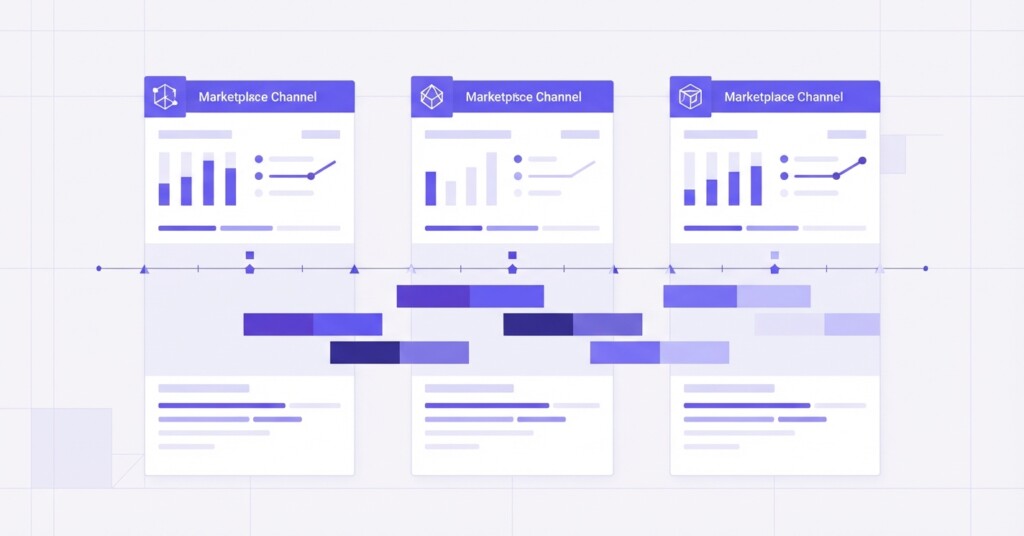
Running promotions across Shopee, Lazada, and TikTok Shop simultaneously is one of the more financially complex challenges in multi-channel e-commerce. Each platform has its own campaign calendar — 9.9, 10.10, 11.11, 12.12, flash sales, voucher drops, affiliate campaigns — and they frequently overlap. When you discount the same SKU across all three channels at the same time without a coordinated strategy, you risk margin collapse, channel cannibalisation, and distorted performance data that makes it nearly impossible to understand what actually drove a sale.
This article walks through a practical framework for aligning your promotional calendar across platforms, protecting margin on each channel, and reading the performance data correctly so you know which channel is genuinely contributing to growth versus simply pulling demand away from another.
Why Promotional Cannibalisation Happens
Cannibalisation occurs when a sale on one channel displaces a sale that would have happened on another — often at a higher margin. It is not always obvious from top-line revenue. Your total revenue might look flat or even grow slightly during a campaign period, while your blended contribution margin quietly deteriorates.
Consider a seller running the same 20% discount on a skincare set across Shopee, Lazada, and TikTok Shop during a platform campaign week. A loyal Shopee buyer who was already planning to purchase at full price simply migrates to whichever platform has the deepest voucher stack. The seller counts three platform campaigns as a success because GMV lifted, but net revenue and gross profit both fell — and the Shopee full-price velocity data is now corrupted for the next 30 days.
The key distinction to track is not which channel had the highest GMV during a campaign, but which channel delivered incremental sales — orders that would not have occurred without the promotion — versus displaced sales that simply moved between channels.
Step 1: Map Your Promotional Calendar Against Channel Characteristics
Before you can coordinate promotions, you need a clear picture of how each channel behaves commercially. Shopee, Lazada, and TikTok Shop have meaningfully different buyer profiles, basket sizes, conversion mechanics, and cost structures. Promotions that perform well on TikTok Shop — driven by content discovery and impulse purchase — often behave very differently on Lazada, where search intent and voucher mechanics dominate.
| Factor | Shopee | Lazada | TikTok Shop |
|---|---|---|---|
| Primary discovery mechanic | Search + flash sale widgets | Search + brand stores | Video content + live stream |
| Buyer intent | Planned + deal-driven | Planned + brand loyal | Impulse + content-driven |
| Typical basket size | Low to mid | Mid to high | Low to mid |
| Commission rate (indicative) | 4–10% | 4–10% | 4–9% (varies by category) |
| Promotional cost driver | Voucher subsidies + coins | Voucher + LazCoins | Creator commissions + ads |
| Campaign frequency | Very high | High | High (tied to content cycle) |
Once you understand these differences, you can begin assigning promotions by channel purpose rather than running identical campaigns everywhere. The goal is channel differentiation — giving buyers a reason to purchase on each platform, rather than forcing them to arbitrage between them.
Step 2: Assign Promotional Roles to Each Channel
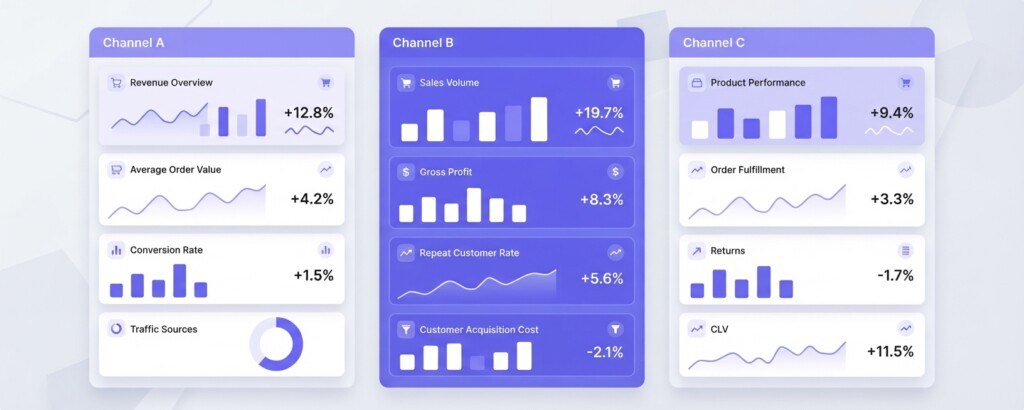
A practical framework is to assign each channel a primary promotional role based on its strengths. This does not mean you ignore the other channels during a campaign — it means you structure the offer differently on each platform so the channels are not competing for the same purchase decision.
- Shopee: Use for volume-driven campaign peaks (9.9, 11.11) with bundle deals or free-gift mechanics rather than straight percentage discounts. Shopee’s ecosystem rewards high-velocity listings, so campaigns that move units quickly benefit from search ranking uplift.
- Lazada: Focus on higher-margin SKUs, brand store exclusives, or bundle upgrades. Lazada buyers tend to have higher brand awareness and are more receptive to value-add offers (extended warranty, gift sets) than raw discounting.
- TikTok Shop: Reserve for new product launches, content-driven limited editions, or creator-exclusive offers. The impulse purchase dynamic means fresh SKUs and genuine scarcity work better than deep discounts on core catalogue items.
By differentiating the offer structure — not just the discount depth — you give buyers a channel-specific reason to purchase on that platform. A buyer who sees a bundle deal on Shopee, a gift-with-purchase on Lazada, and a creator-exclusive colourway on TikTok Shop is not making a straight price comparison. You have created three distinct value propositions.
Step 3: Calculate Contribution Margin by Channel Before Committing to a Campaign
Many operators assess promotions by GMV lift alone. The more useful question is: what is the contribution margin per order on this channel after all costs are deducted? Platform fees, shipping subsidies, voucher costs, ad spend, and creator commissions vary significantly by channel and campaign type. A campaign that looks profitable on paper can destroy margin at the order level.
| Selling price (post-discount) | $38.00 |
| Less: COGS | –$14.00 |
| Less: Platform commission (3.5%) | –$1.33 |
| Less: Seller-funded voucher subsidy | –$3.00 |
| Less: Shipping subsidy | –$2.50 |
| Less: Paid ads allocation per order | –$2.20 |
| Contribution margin per order | $14.97 |
Run this calculation for each channel before the campaign goes live. If TikTok Shop requires an 8% creator commission on the same SKU and your ad spend per order is higher due to content production costs, the contribution margin on that channel might drop to $8.00 — less than half of what Shopee delivers. That does not necessarily mean you should not run the TikTok campaign, but it changes the strategic rationale. You are buying content, awareness, and new-to-brand customers, not margin. Know what you are paying for.
Never commit to a cross-platform campaign without calculating order-level contribution margin on each channel separately. GMV growth during a campaign period can mask margin collapse, particularly when voucher subsidies, shipping fees, and creator commissions are compounding across platforms simultaneously.
Step 4: Stagger Campaign Timing to Reduce Direct Overlap
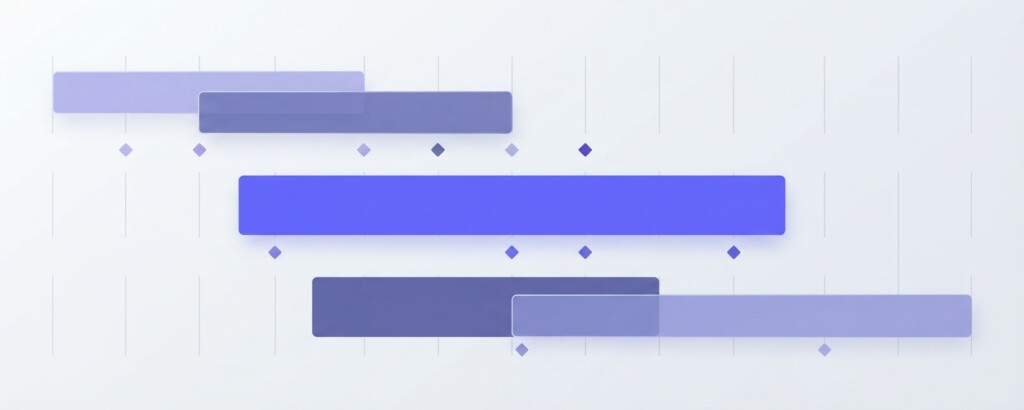
Even when platforms run campaigns on the same calendar date — 11.11 is an obvious example — you have more timing flexibility than you might think. Platform campaigns often run for several days or weeks around the peak date. A practical staggering approach:
- Run your TikTok Shop content push in the lead-up week to build awareness and capture impulse buyers early.
- Activate your Shopee campaign on the peak day itself, capturing price-sensitive search-driven buyers at the moment of highest platform traffic.
- Use Lazada for a post-peak ‘extended sale’ window (typically days 2–5 after the peak date), targeting buyers who researched during the peak but delayed purchase — often a higher-intent, lower-price-sensitivity segment.
This approach lets you participate in all three platform campaigns while reducing the window in which the same buyer can easily compare your offer across channels in real time. It also gives you cleaner performance data, since the sales curves on each channel do not perfectly overlap.
Step 5: Use SKU Differentiation as a Structural Defence
The most durable way to prevent cannibalisation is to make direct price comparison structurally difficult. You can do this without maintaining a completely separate product catalogue — small but meaningful differences in product configuration achieve the same result.
| Channel | SKU Configuration | Promo Mechanic | Rationale |
|---|---|---|---|
| Shopee | Single unit (100ml) | Bundle 2 + free pouch | Volume play, rewards Shopee’s flash sale mechanics |
| Lazada | Starter kit (100ml + 50ml travel size) | Gift-with-purchase at threshold | Higher basket value, suits Lazada brand store format |
| TikTok Shop | Creator bundle (100ml + exclusive shade) | Limited quantity, creator discount code | Scarcity + creator authenticity drives conversion |
| Own website (Shopify) | Full-size (200ml) | Loyalty points double-up | Protects direct channel margin, rewards repeat buyers |
When a buyer searches for your product across platforms, they cannot find an identical listing at three different prices. Each channel has a genuinely different offer. This approach requires slightly more operational coordination — different listings, different packaging configurations, potentially different purchase orders — but the margin and channel-integrity benefits are significant over time.
Step 6: Measure Incrementality, Not Just Campaign Uplift
After each campaign cycle, the question your analytics should answer is not ‘did sales go up?’ but ‘did total net revenue and contribution margin improve relative to a baseline, and did any channel lose ground it did not recover post-campaign?’ These are incrementality questions, and they require looking at a longer window — typically the four weeks before, the campaign period, and the four weeks after.
Platforms like BrizoMarket can be useful here because they consolidate channel-level revenue, margin, and order data in one place, making it easier to compare pre- and post-campaign performance across Shopee, Lazada, and TikTok Shop without manually reconciling reports from three separate seller centres. When you can see contribution margin by channel in one view, the tradeoffs in a cross-platform promotional strategy become much clearer.
Key metrics to track per channel, per campaign:
- Order volume: Campaign period vs prior 4-week average
- Average order value: Did discounting change basket composition?
- Gross margin %: Before and after all platform costs
- Contribution margin per order: Net of ads, commissions, vouchers, shipping
- New-to-channel buyers: What % of campaign orders came from first-time buyers on that platform?
- Post-campaign velocity: Did organic sales on each channel recover within 2 weeks?
A Note on Voucher Stacking and Subsidy Costs
One of the most frequently underestimated costs in multi-channel promotional planning is the voucher subsidy. Shopee and Lazada both operate seller-funded voucher programmes where the discount is shared between the platform and the seller — but the split and mechanics differ, and buyers can often stack a platform-wide voucher on top of a seller voucher, compounding the discount well beyond what the seller intended.
Before any campaign, confirm the exact voucher stacking rules on each platform for that specific campaign type, calculate your worst-case discount depth (maximum stack), and ensure your contribution margin calculation uses that worst-case number rather than the nominal discount rate you set.
Practical Next Steps
Managing a coordinated promotional calendar across three marketplaces is not a one-time exercise — it is a recurring planning discipline. Start with these actions before your next campaign cycle:
- Map the next 90 days of platform campaigns across Shopee, Lazada, and TikTok Shop and identify every overlap window.
- For each overlap, decide whether you will stagger timing, differentiate the SKU configuration, or use a different promotion mechanic on each channel.
- Build a contribution margin model for each channel that includes platform commission, voucher subsidy, shipping, and ad spend — and run it before confirming any campaign participation.
- After each campaign, pull channel-level margin data and compare to your pre-campaign baseline for a minimum 4-week window post-campaign.
- Review which channel delivered the highest proportion of new-to-brand buyers — this is often the best indicator of genuine incremental value versus demand displacement.
Multi-channel promotion done well is not about being present everywhere with the same offer. It is about understanding what each channel does commercially, designing offers that work with those mechanics, and measuring outcomes at the margin level — not just the revenue line. Sellers who build this discipline into their planning cycle consistently protect margin better and extract more long-term value from each platform relationship.
Track Margin Across Every Channel in One Place
BrizoMarket helps e-commerce operators consolidate revenue, cost, and margin data from Shopee, Lazada, TikTok Shop, and Shopify — so you can make smarter promotional decisions with real numbers, not platform-reported GMV.