How to Allocate Inventory Across Channels When Stockouts on One Platform Cannibalise Sales on Another

If you sell across Shopify, Shopee, Lazada and TikTok Shop simultaneously, you have almost certainly faced this scenario: a flash sale on TikTok Shop drains your fastest-moving SKU overnight, and by the next morning your Shopify store and Lazada listings are showing zero stock. Orders stall, your search ranking on Lazada drops, and loyal Shopify customers who would have paid full price are now seeing ‘out of stock.’ The lost revenue is obvious. The less obvious damage — to rankings, to customer trust, to contribution margin — compounds quietly for days afterwards.
Multi-channel inventory allocation is not simply a logistics problem. It is a profitability decision. Where you place stock determines which channel captures the sale, at what margin, and at what cost. This article walks through a practical framework for allocating inventory in a way that protects your most profitable channels without starving your high-volume ones.
Why Stockouts on One Channel Cannibalise Another
The term ‘cannibalisation’ usually refers to one of your own products stealing sales from another. In a multi-channel context, it works differently: a stockout on a lower-margin channel forces demand to disappear entirely rather than redirect cleanly to a higher-margin channel. Customers on Shopee do not automatically migrate to your Shopify store when they see zero stock. They buy from a competitor.
There is also a secondary cannibalisation effect. Many multi-channel sellers use pooled or shared inventory connected through a third-party sync tool. When TikTok Shop runs a campaign and pulls heavily from the shared pool, the buffer that was intended for Shopify and Lazada evaporates before the system can react. The sync tool catches up, but the stockout has already been live for several hours — long enough to damage your platform ranking and lose high-intent buyers.
The core insight: inventory allocation is a margin decision first, and a fulfilment decision second. Placing stock where it converts at the highest contribution margin per unit, without starving other channels, is the goal — not simply keeping every channel ‘topped up’ equally.
Start With Contribution Margin per Channel, Not Just Revenue
Before you can make intelligent allocation decisions, you need to know what each channel actually earns per unit sold — not just the gross revenue figure. Many operators discover that their highest-revenue channel is not their highest-margin channel once platform fees, campaign discounts, shipping subsidies and return rates are factored in.
Consider a skincare brand selling a serum at a retail price of $38. The table below shows a simplified contribution margin comparison across four channels for the same SKU.
| Metric | Shopify DTC | Shopee | Lazada | TikTok Shop |
|---|---|---|---|---|
| Selling Price | $38.00 | $32.00 | $34.00 | $28.00 |
| Platform / Transaction Fee | $1.14 | $3.52 | $3.74 | $3.36 |
| Shipping Subsidy Paid by Seller | $0.00 | $2.50 | $1.80 | $3.50 |
| Voucher / Discount Cost | $0.00 | $3.00 | $2.00 | $5.00 |
| Cost of Goods (COGS) | $9.00 | $9.00 | $9.00 | $9.00 |
| Fulfilment & Packaging | $3.20 | $3.20 | $3.20 | $3.20 |
| Contribution Margin | $24.66 | $10.78 | $14.26 | $3.94 |
| Contribution Margin % | 64.9% | 33.7% | 41.9% | 14.1% |
The TikTok Shop column is a common reality for sellers running aggressive live-commerce campaigns. The platform drives impressive volume, but after discounts, shipping subsidies and fees, the contribution margin per unit can fall below 15%. If aggressive TikTok Shop sales then drain inventory away from your Shopify DTC channel — where you are earning $24.66 per unit — the financial damage is significant even when the total units sold looks the same.
Building a Channel Priority Matrix
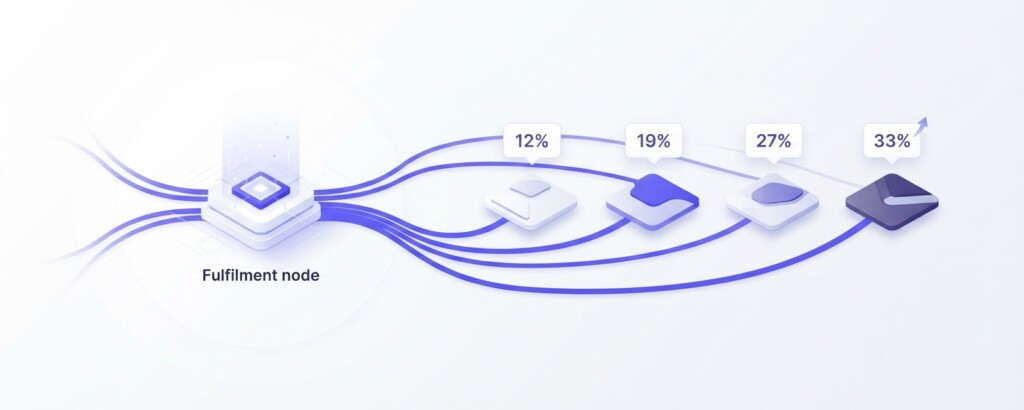
A channel priority matrix ranks your channels across two dimensions: contribution margin per unit and strategic importance. Strategic importance includes factors like brand visibility, customer acquisition value and long-term retention. A channel with lower margins may still warrant stock protection if it drives significant new customer acquisition that you later convert on a higher-margin channel.
For most multi-channel operators, the practical priority order looks like this:
- Shopify DTC — highest margin, owns the customer relationship, no platform dependency
- Lazada — moderate margin, strong search intent buyers, ranking sensitive to stockouts
- Shopee — moderate-to-lower margin depending on campaign participation, high volume potential
- TikTok Shop — lowest margin per unit in campaign mode, but high discovery and new customer value
Your own numbers may produce a different ordering. The point is to do the calculation before making allocation decisions rather than distributing stock based on gut feel or which channel is most demanding at a given moment.
The Reserved Stock Method
One of the most reliable practical methods is reserved stock allocation. Rather than allowing all channels to draw from a single shared pool, you pre-assign minimum stock buffers to your highest-priority channels before making remaining inventory available to lower-margin or higher-volatility channels.
Here is how to apply it to a SKU with 500 units on hand, using the channel priority order above.
| Total Available Stock | 500 units |
| Reserved for Shopify DTC (20 days of cover at baseline demand) | −80 units |
| Reserved for Lazada (maintain minimum listing threshold) | −60 units |
| Available for Shopee (standard allocation) | −180 units |
| Remaining available for TikTok Shop campaigns | 180 units |
The TikTok Shop allocation is what remains after protecting your higher-margin channels. If TikTok Shop sells through its 180-unit allocation during a campaign, it goes out of stock on that platform — but your Shopify DTC and Lazada listings remain live and unaffected. This is a deliberate trade-off: you limit TikTok Shop revenue in exchange for protecting your overall contribution margin and channel health.
Do not use a flat percentage split across channels without first validating daily sell-through rates per channel. A 25% split sounds fair, but if TikTok Shop burns through stock at 10× the daily rate of Shopify DTC, a flat split will still result in a cross-channel stockout within days of a campaign launch.
Measuring Sell-Through Velocity per Channel
Accurate allocation requires knowing your sell-through velocity — the rate at which each channel depletes stock — both in baseline periods and during promotional events. Without this, any allocation framework is guesswork.
Calculate velocity as units sold per day over a rolling period (typically 14 or 30 days for baseline, and separately tracked during campaign windows). Then use this to determine how many days of cover each channel currently has.
| Channel | Current Stock Allocated | Units Sold Last 14 Days | Daily Velocity | Days of Cover |
|---|---|---|---|---|
| Shopify DTC | 80 units | 56 units | 4 units/day | 20 days |
| Lazada | 60 units | 70 units | 5 units/day | 12 days |
| Shopee | 180 units | 210 units | 15 units/day | 12 days |
| TikTok Shop | 180 units | 280 units | 20 units/day | 9 days |
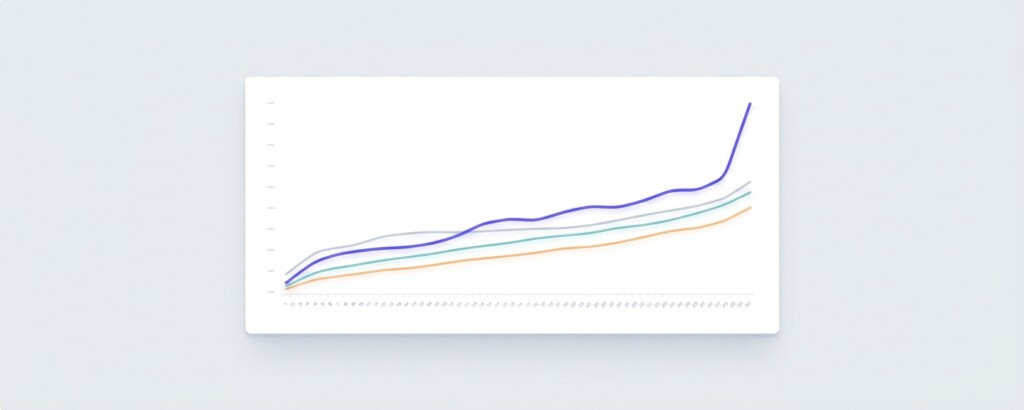
In this example, TikTok Shop has only 9 days of cover under normal trading conditions — meaning any promotional activity will accelerate that stockout considerably. With a campaign that doubles velocity to 40 units per day, the TikTok Shop allocation runs dry in under 5 days. Planning for this in advance allows you to either replenish the allocation, reduce campaign aggressiveness, or accept the stockout consciously rather than have it drain your other channel buffers.
Campaign Coordination as an Inventory Control Tool
One underutilised lever is simply coordinating your campaign calendar against your replenishment cycle. If your lead time from supplier to warehouse is 21 days, running a major TikTok Shop campaign in week one of a new stock arrival makes sense. Running one in week three — when stock is already partially depleted — risks the cascade stockout problem you are trying to avoid.
Similarly, if Shopee is running a 9.9 or 11.11 mega-sale, pre-allocating additional stock to Shopee in advance and temporarily reducing TikTok Shop allocation for that window is a rational response. This requires cross-functional coordination between your marketing, operations and finance teams — but the margin impact of getting it right is material.
What to Track After an Allocation Change
After implementing a reserved stock model or adjusting allocations, track the following metrics over a 4-to-6 week period to validate the decision.
- Blended contribution margin across all channels (target: improving or stable)
- Stockout frequency per channel (target: zero on Shopify DTC and Lazada)
- Units sold per channel vs prior period (expect TikTok Shop volume may decline — this is acceptable if margin improves)
- Lazada and Shopee search ranking for key SKUs (a proxy for listing health post-stockout)
- Return-on-ad-spend (ROAS) per channel — wasted ad spend during stockouts shows up here as a sharp deterioration
If you are managing this analysis manually across multiple channels, the data aggregation becomes the bottleneck quickly. Tools that consolidate order, inventory and margin data across Shopify, Shopee, Lazada and TikTok Shop into a single view significantly reduce the time needed to track these metrics consistently. BrizoMarket is built specifically for this kind of multi-channel profitability analysis, allowing operators to compare channel contribution margins and identify allocation inefficiencies without exporting spreadsheets from four different dashboards.
A Practical Checklist Before Your Next Campaign
- Calculate contribution margin per unit for each channel for the SKUs being promoted
- Check current stock on hand and days of cover per channel at baseline velocity
- Estimate campaign velocity (use previous campaign data or conservative 2× baseline)
- Apply reserved stock buffers to your highest-margin channels before setting campaign allocation
- Confirm your replenishment lead time and align campaign timing accordingly
- Set a stockout alert threshold (e.g. notify when any channel drops below 3 days of cover)
- After the campaign, review blended contribution margin to validate the allocation decision
The Bottom Line
Multi-channel inventory allocation is one of the highest-leverage decisions an e-commerce operator can make, and one of the most commonly managed by default rather than design. The businesses that do it well are not simply the ones with the most sophisticated tooling — they are the ones that have done the work to understand their contribution margin per channel per SKU, and have built allocation rules around protecting that margin.
Start with your numbers. Build your priority matrix. Apply reserved stock rules before the next campaign cycle. Then measure the difference in blended margin. The improvement is almost always visible within the first month.
Analyse Your Channel Profitability in One Place
BrizoMarket helps multi-channel e-commerce operators compare contribution margins across Shopify, Shopee, Lazada and TikTok Shop — so you can make inventory allocation decisions based on real profitability data, not guesswork.