How to Build a Supplier Lead Time Tracker That Prevents Stockouts During Peak Sale Events Across All Channels
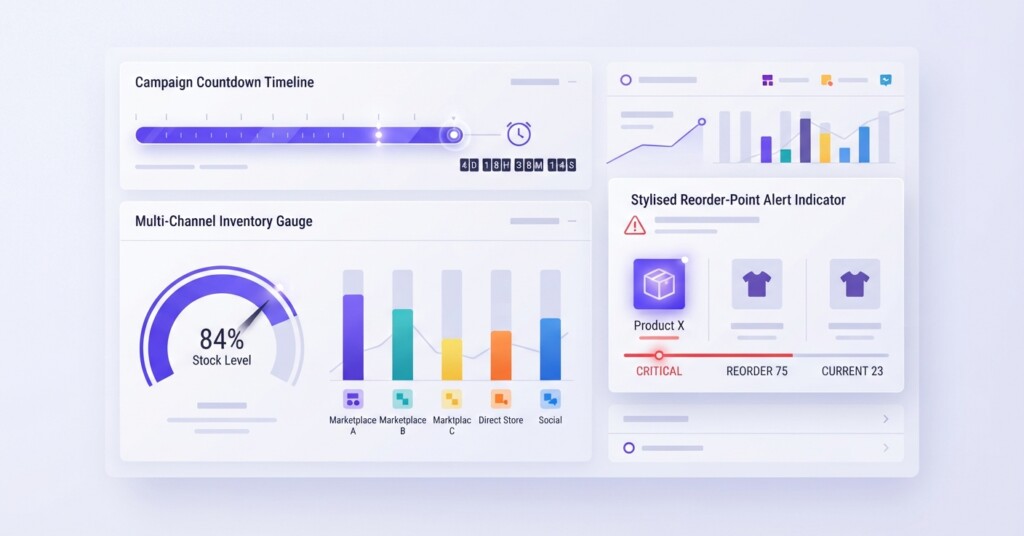
Missing stock during a peak sale event is one of the most expensive mistakes a multi-channel e-commerce business can make. You have already paid for the ads, negotiated the promotions with Shopee or Lazada, set up your TikTok Shop livestream, and driven traffic to your Shopify store — only to watch orders bounce because your best-selling SKUs ran dry three days into the campaign. The root cause, almost every time, is a failure to account for supplier lead times accurately and consistently across all channels before the sale window opens.
This article walks you through how to build a practical supplier lead time tracker, integrate it into your pre-sale inventory planning process, and use it to set reorder triggers that protect your margins and your sell-through rate across every channel you operate.
Why Lead Time Tracking Breaks Down for Multi-Channel Sellers
Most e-commerce operators have a rough sense of how long their suppliers take to deliver. The problem is that ‘rough’ is not good enough when you are managing simultaneous campaigns across Shopify, Shopee, Lazada, and TikTok Shop. Each channel has different promotional calendars, different fulfilment requirements, and different velocity characteristics. A SKU that sells 20 units a week on Shopify might sell 300 units in 48 hours during a Shopee 11.11 flash deal.
The common failure modes are: relying on memory or informal notes instead of a structured record, using a single average lead time figure that ignores seasonal supplier delays, failing to separate production lead time from shipping lead time, and not building in a safety buffer that accounts for channel-specific demand spikes.
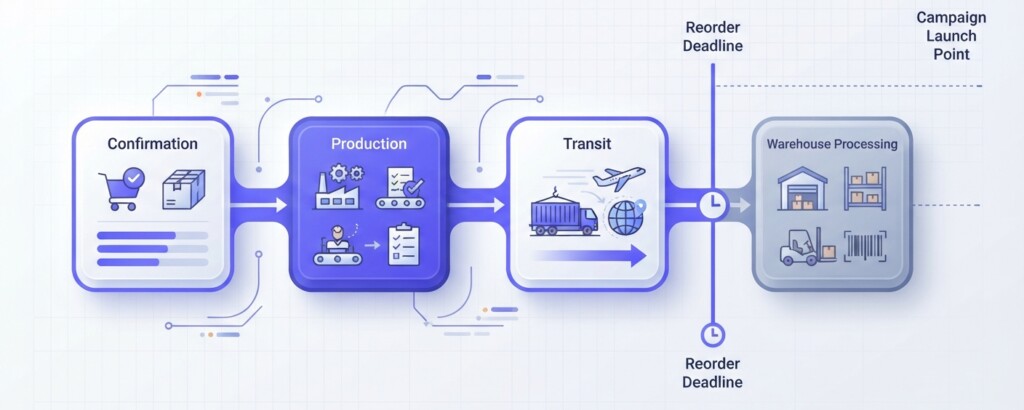
Lead time is not just transit time. It includes the time from when you place a purchase order to when stock is physically available to pick and dispatch. This can include supplier production, quality checks, freight, customs clearance, and inbound warehouse processing. Each stage needs to be tracked separately.
The Four Components of a True Supplier Lead Time
Before you can build a tracker, you need to define exactly what you are measuring. Supplier lead time is best broken into four distinct stages, each of which can vary independently.
- Order Confirmation Lag: The time between sending a purchase order and receiving supplier confirmation. This is often overlooked but can add 1–3 days, especially with overseas manufacturers.
- Production or Packing Time: The time for the supplier to manufacture, assemble, or pack the goods to your specification. For custom or made-to-order products this can be 7–21 days or more.
- Transit Time: The time from supplier dispatch to arrival at your warehouse or 3PL. This varies by freight mode — air freight versus sea freight can be 3 days versus 25+ days.
- Inbound Processing Time: The time your warehouse needs to receive, inspect, count, and book stock into your inventory system before it is available to fulfil orders.
A realistic total lead time for a mid-range consumer goods seller sourcing from an overseas manufacturer (such as in China) and shipping to a Singapore or Malaysian fulfilment centre might look like this:
| Order Confirmation Lag | 2 days |
| Production / Packing Time | 7 days |
| Air Freight Transit (e.g. China to Singapore) | 4 days |
| Customs Clearance | 2 days |
| Inbound Warehouse Processing | 2 days |
| Total Lead Time | 17 days |
If your 11.11 campaign on Shopee starts on 11 November and you want stock available by 8 November (a three-day buffer), your purchase order needs to be placed no later than 22 October. Many sellers miss this window simply because they never calculated it systematically.
Building the Tracker: What to Record for Each Supplier and SKU
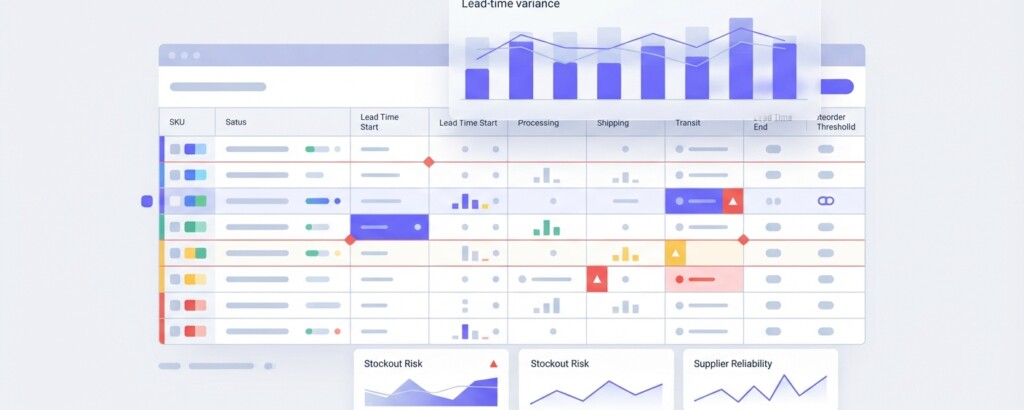
Your lead time tracker should live in a shared spreadsheet or a lightweight operations tool, and it should be updated after every purchase order cycle. The goal is to build a historical record that reveals patterns — suppliers who consistently run late, SKUs with variable production times, and freight lanes that slow down in certain months.
At minimum, your tracker should capture the following fields for each purchase order:
| Field | What to Record | Why It Matters |
|---|---|---|
| Supplier Name | Name and contact of supplier | Links PO data to vendor performance history |
| SKU / Product Code | Your internal SKU reference | Tracks lead time at the product level, not just supplier level |
| PO Sent Date | Date you submitted the purchase order | Starting point for lead time calculation |
| Supplier Confirmation Date | Date supplier confirmed the order | Captures confirmation lag |
| Dispatch Date | Date supplier shipped the goods | Captures production time = Dispatch minus Supplier Confirmation Date |
| Arrival Date at Warehouse | Date goods physically arrived | Captures transit time |
| Available-to-Sell Date | Date stock was live in your inventory system | Captures inbound processing time |
| Total Lead Time (days) | Available-to-Sell minus PO Sent | Your true operational lead time for planning |
| Freight Mode | Air / Sea / Road / Express | Explains variance between orders |
| Notes | Any delays, issues, or exceptions | Builds institutional knowledge |
Once you have three or more data points per supplier-SKU combination, you can calculate an average lead time and a worst-case lead time. Use the worst-case figure for peak sale planning, not the average. During Q4 campaign periods, supplier factories often run at capacity, freight networks become congested, and your ‘normal’ 17-day lead time can stretch to 25 or 30 days without warning.
Calculating Your Reorder Point for Each Channel
A reorder point (ROP) is the inventory level at which you must place a new purchase order to avoid running out of stock before the new shipment arrives. For multi-channel sellers, this calculation needs to account for the combined demand velocity across all active channels, not just one.
The formula is straightforward: Reorder Point = (Average Daily Sales Across All Channels × Lead Time in Days) + Safety Stock.
Here is a worked example for a skincare brand selling a hero moisturiser across Shopify, Shopee, and Lazada. In a normal week, the product sells 15 units on Shopify, 25 units on Shopee, and 10 units on Lazada — a combined 50 units per week, or roughly 7 units per day. During a 9.9 campaign, historical data shows this product sells 4× its normal daily rate for 5 days.
| Normal Average Daily Sales (all channels combined) | 7 units/day |
| Peak Sale Multiplier (based on historical 9.9 data) | 4× |
| Peak Daily Sales Estimate | 28 units/day |
| Worst-Case Lead Time (from tracker history) | 25 days |
| Stock Needed to Cover Lead Time at Peak Rate | 700 units |
| Safety Stock (10 days at peak rate) | 280 units |
| Reorder Point | 980 units |
When your combined on-hand inventory across all channels drops to 980 units, you place your next purchase order. This is a conservative figure, but stockouts cost far more in lost revenue, damaged channel rankings, and customer attrition than the carrying cost of holding additional inventory for a few extra weeks.
Do not calculate your reorder point using only your Shopify sales data if you also sell on Shopee, Lazada, or TikTok Shop. All channels draw from the same physical stock. If you plan based on one channel and then run a promotion on another, you will likely create a stockout on both simultaneously.
Building a Pre-Sale Campaign Checklist Driven by Lead Time Data
Lead time data only protects you if it drives actual decisions before each campaign. Build a standard pre-sale checklist that your operations or buying team runs 6–8 weeks before every major sale event — including Shopee 9.9, 11.11, Lazada Birthday Sales, Harbolnas, and your own Shopify store promotions.
- Pull the last 3 purchase orders per supplier and calculate the average and worst-case lead time from your tracker.
- Identify your top 20 SKUs by revenue and gross profit contribution across all channels for the equivalent campaign period last year.
- Estimate peak daily demand for each SKU using last year’s campaign uplift multiplier or a conservative 3–5× estimate if no historical data exists.
- Calculate the reorder point for each SKU using worst-case lead time and peak demand.
- Check current on-hand stock against each reorder point. Flag any SKU already below the threshold.
- Place purchase orders for all flagged SKUs immediately, with a delivery deadline set at least 5 days before the campaign start date.
- Confirm supplier capacity in writing, particularly for peak periods when your supplier may be serving multiple buyers simultaneously.
- Set calendar reminders to follow up on dispatch confirmation and track inbound shipments in real time.
- Allocate confirmed incoming stock to channels based on each channel’s expected sell-through rate and historical campaign performance.
- Review reorder points and lead time estimates after the campaign ends and update your tracker with actual results.
Channel Allocation: How to Split Incoming Stock Across Shopify, Shopee, Lazada, and TikTok Shop
Once you know how much stock is arriving and when, the next decision is how to allocate it across channels. This should be driven by contribution margin per unit per channel, not just by which channel drives the highest raw volume.
Shopee and Lazada campaigns often require heavy discounting and platform fee contributions that compress your margins significantly. TikTok Shop may carry creator commission costs. Your Shopify store, while typically lower in traffic volume, may deliver a substantially higher contribution margin per unit because you are not paying marketplace commissions or funding platform vouchers.
| Channel | Selling Price | Platform Fee / Commission | Ad Spend per Unit Sold | COGS | Contribution Margin per Unit | Contribution Margin % |
|---|---|---|---|---|---|---|
| Shopify | $38.00 | $0.80 (payment gateway) | $4.50 | $12.00 | $20.70 | 54% |
| Shopee (campaign) | $28.00 | $3.36 (12% fee) | $2.80 | $12.00 | $9.84 | 35% |
| Lazada (campaign) | $27.00 | $3.51 (13% fee) | $3.20 | $12.00 | $8.29 | 31% |
| TikTok Shop | $32.00 | $3.84 (12% fee + creator) | $1.50 | $12.00 | $14.66 | 46% |
In this example, allocating stock to Shopify first maximises contribution margin per unit. If stock is constrained, it may be more profitable to run a smaller campaign on Shopee or Lazada and preserve more units for direct-to-consumer Shopify sales rather than chasing top-line GMV at margin-eroding price points.
This kind of channel-level margin comparison is exactly the type of analysis that becomes routine when you have clean, centralised data. Tools like BrizoMarket are built to surface this type of multi-channel profitability view, so you can make stock allocation decisions based on actual contribution margin rather than gut feel.
Handling Supplier Delays: Contingency Planning
Even with a well-structured tracker and timely purchase orders, suppliers miss deadlines. Build a simple contingency protocol into your pre-sale process. If stock is confirmed delayed past your campaign start date, you have three options: source from a secondary supplier at a potentially higher COGS, reduce the depth of your promotion (fewer vouchers, higher minimum spend), or temporarily delist the SKU from one or more channels to protect stock for your highest-margin channel. Having pre-identified secondary suppliers for your top SKUs is a low-cost insurance policy that most multi-channel sellers never bother to set up until after their first major stockout.
Key Takeaways and Next Steps
A supplier lead time tracker does not need to be a complex system. A well-maintained spreadsheet, updated after every purchase order, gives you the data you need to calculate accurate reorder points, hit your campaign inventory targets, and allocate stock to the channels that deliver the best margins. The discipline is in the consistency — recording actual lead times, reviewing them before each peak event, and using the worst-case figure rather than the optimistic average when the stakes are high.
Start with your top 20 SKUs by revenue contribution. Build your tracker for those products first, run through the reorder point calculation for your next campaign, and place any purchase orders that fall below the threshold today. That single action will do more for your peak sale performance than any amount of advertising optimisation applied to a product that is out of stock.
Understand Your Multi-Channel Profitability Before the Next Sale Event
BrizoMarket helps e-commerce operators track channel performance, margins, and product profitability across Shopify, Shopee, Lazada, and TikTok Shop in one place — so you can make smarter inventory and campaign decisions based on real contribution margin data.