How to Reconcile Stock Discrepancies Between Your 3PL and Each Marketplace After a Peak Sale Event
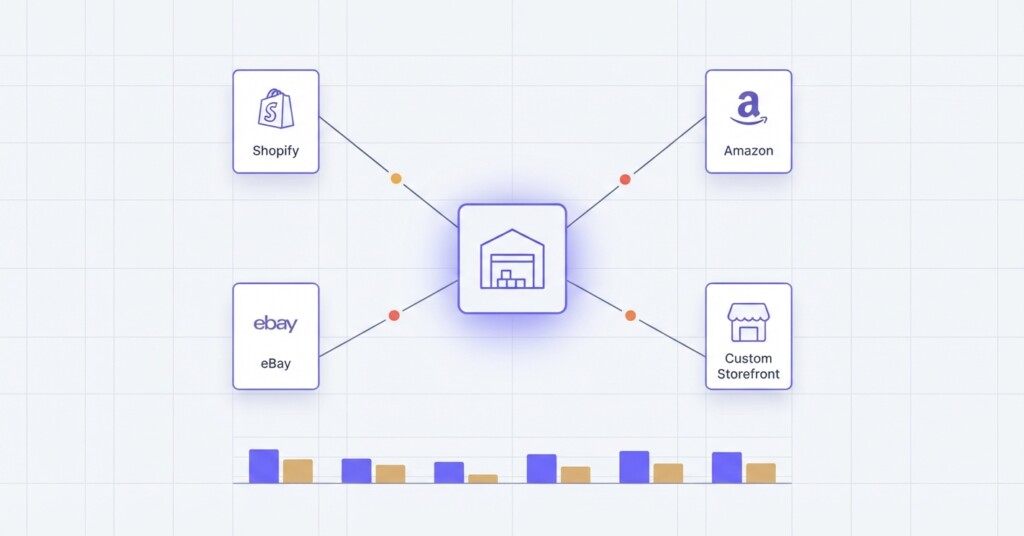
A major sale event — whether it is 11.11, a mid-year flash sale, or a brand-specific campaign — puts enormous strain on fulfilment operations. Orders spike across Shopify, Shopee, Lazada, and TikTok Shop simultaneously. Your 3PL is picking, packing, and dispatching at full speed. Couriers are collecting multiple times a day. And somewhere in that chaos, the inventory numbers start to drift.
When the dust settles, most multi-channel operators find the same uncomfortable truth: the stock counts reported by their 3PL do not match what each marketplace believes is available. Some SKUs show phantom inventory. Others appear oversold. Returns are trickling back in but have not yet been restocked. It is a reconciliation problem, and if you do not resolve it cleanly, it will distort your profitability reporting, trigger unnecessary purchase orders, and cause stockouts or overselling in the weeks that follow.
This article walks through a structured, practical approach to post-peak stock reconciliation — covering the sources of discrepancy, the reconciliation process by channel, and how to translate clean inventory data into accurate financial reporting.
Why Discrepancies Happen After Peak Events
Stock discrepancies are not random. They tend to cluster around a handful of predictable causes that are amplified by high order volumes.
- Timing lags between a marketplace confirming an order and your 3PL receiving and processing the pick instruction
- Cancelled orders that were already picked or partially picked before the cancellation was communicated
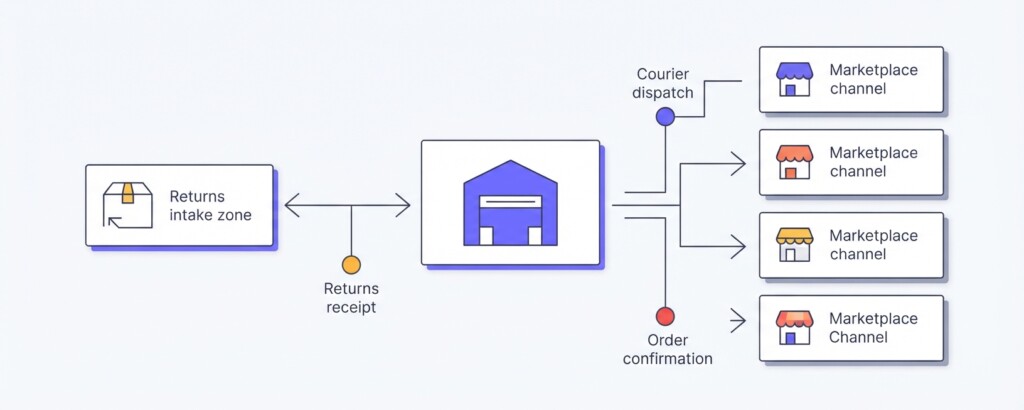
- Returns received at the warehouse that have not yet been inspected, restocked, or logged against the correct SKU
- Courier collections that were scanned out of the 3PL but not yet accepted by the carrier, leaving units in a limbo status
- Bundled or kitted products where component inventory is not properly deducted across all channels
- Manual stock adjustments made under pressure during the sale that were not documented
- Marketplace-held inventory (such as Lazada or Shopee fulfilment stock) that moves independently of your 3PL
The most expensive discrepancies are not the ones that appear as missing units — they are the ones that cause you to reorder stock you already have, or to mark products as available when they are not. Both outcomes directly damage your gross margin and customer experience.
Step 1 — Pull a Clean Snapshot From Every Data Source
Reconciliation starts with a timestamp. Choose a cutoff — ideally the end of day immediately following the peak event — and pull the following reports as close to that moment as possible.
| Data Source | Report or Export Required | Key Fields to Capture |
|---|---|---|
| 3PL Warehouse System | Closing stock report by SKU | On-hand qty, reserved qty, damaged qty, returns pending restock |
| Shopify | Inventory levels export | Available qty, committed qty, incoming qty per location |
| Shopee | Seller Centre stock report | Available stock, pending shipment, returned units |
| Lazada | Seller Centre inventory report | Active listings qty, reserved for orders, FBL stock if applicable |
| TikTok Shop | Product inventory report | Available, locked (pending fulfilment), returned |
Do not rely on live dashboards that update in real time — they will shift while you are reading them. Request static exports or take screenshots with timestamps. This is your baseline.
Step 2 — Build a Master Reconciliation Sheet by SKU
With all reports pulled, consolidate them into a single spreadsheet or data tool where each row is a unique SKU and each column represents a data source. Your goal is to identify the ‘expected’ total inventory versus what each system actually reports.
Start with the opening stock figure from before the sale event. Then apply the following formula for each SKU:
| Opening Stock (pre-event) | e.g. 500 units |
| Less: Orders Dispatched (confirmed by 3PL) | e.g. −320 units |
| Less: Damaged / Write-offs Reported | e.g. −5 units |
| Plus: Returns Restocked | e.g. +18 units |
| Plus: New Stock Received During Event | e.g. +0 units |
| Expected Closing Stock | 193 units |
Now compare this expected closing figure against what your 3PL actually reports on hand. Any gap is a discrepancy that needs a category assigned to it: timing lag, unprocessed return, lost units, or data entry error.
Step 3 — Categorise and Quantify Each Discrepancy
Not all discrepancies require the same response. Grouping them by type helps you prioritise and assign the right follow-up action.
| Discrepancy Type | Typical Cause | Action Required |
|---|---|---|
| Timing lag (orders dispatched but not yet deducted) | Sync delay between marketplace and 3PL system | Wait 24–48 hours and re-check; no stock adjustment needed |
| Unprocessed returns | Returns received but not inspected or restocked | Request 3PL return inspection report; restock or write off |
| Phantom inventory on marketplace | Cancelled orders not properly reversed | Manually adjust marketplace listing qty to match 3PL on-hand |
| Short-picked units | 3PL picked fewer units than ordered; shortage not flagged | Raise exception with 3PL; issue partial refunds if applicable |
| Lost in transit | Units scanned out of warehouse but not delivered or returned | Lodge courier claim; write off against cost of goods |
| System error (data entry or API failure) | Manual correction or integration failure during high volume | Correct in both systems; document the adjustment |
Do not adjust your marketplace listings or place replenishment orders until you have accounted for returns that are still in transit. During the two weeks following a major sale, return volumes can be significant. Restocking decisions made before returns are fully processed frequently result in excess inventory and wasted working capital.
Step 4 — Reconcile Channel by Channel, Not Just in Aggregate
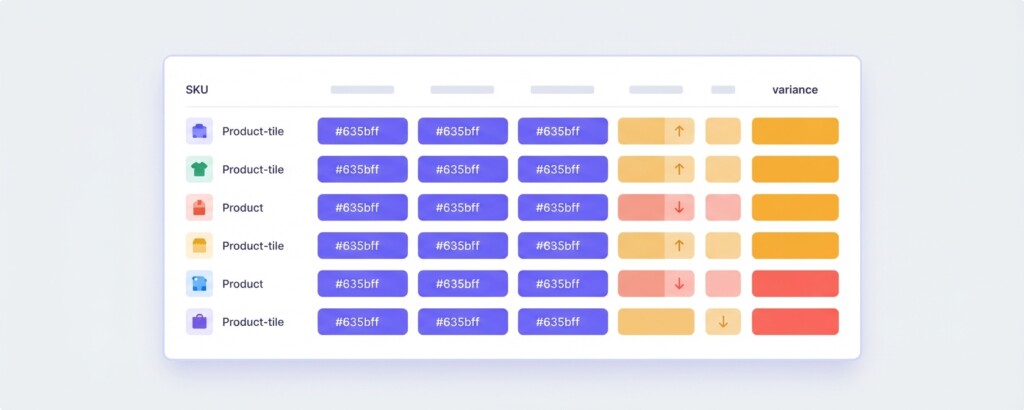
A common mistake is to reconcile total inventory across all channels as a single number. This masks channel-specific problems. Each marketplace needs to be reconciled against the portion of stock allocated to it.
Consider a practical example. Suppose you sell a skincare bundle across four channels. Your 3PL reports 80 units on hand after the sale. But when you break it down:
| Channel | Units Sold (Event) | 3PL Dispatched | Marketplace Reports Available | Variance |
|---|---|---|---|---|
| Shopify | 95 | 95 | 12 units | 0 (correct) |
| Shopee | 140 | 140 | 8 units | +8 phantom (cancelled orders not reversed) |
| Lazada | 62 | 60 | 22 units | +2 short-picked (unfulfilled warehouse shortage) |
| TikTok Shop | 83 | 81 | 38 units | +2 in-transit returns not yet restocked |
In this example, the aggregate looks roughly correct, but channel-level issues are hidden. The Shopee phantom inventory will cause overselling if not corrected. The Lazada short-pick needs a credit or reshipment. The TikTok Shop variance will resolve itself once returns arrive — but needs to be flagged so no one places a purchase order based on a false shortage.
Step 5 — Translate Inventory Reconciliation Into Financial Adjustments
Stock discrepancies are not just an operational problem — they have direct financial consequences. Once you have categorised your variances, convert them into financial line items so your post-event P&L is accurate.
- Lost units: Write off at cost price (cost of goods sold increases, gross profit decreases)
- Damaged goods returned: Write off or revalue at salvage price if units can be sold at a discount
- Short-picks where customers were not refunded: This is a liability — calculate refund obligation at sales price including any platform fees
- Phantom inventory sold that you cannot fulfil: Calculate the cost of expedited replenishment or refund cost
- Returns restocked in good condition: These restore inventory value — ensure they are counted in your closing stock valuation
If you are tracking contribution margin by channel — which you should be — these adjustments need to flow into each channel’s cost figure rather than sitting in a general ‘shrinkage’ bucket. A lost unit that originated from a Lazada order should reduce Lazada’s contribution margin for the period, not be absorbed into overhead.
How Analytics Tools Can Support the Process
Manual reconciliation across four or more channels is time-consuming and error-prone. The more channels you operate, and the higher your order volumes, the more important it becomes to have a system that consolidates inventory and financial data automatically.
BrizoMarket, for example, is built to aggregate order, revenue, and cost data across channels including Shopify, Shopee, Lazada, and TikTok Shop. This makes it easier to identify where inventory and sales figures diverge at the SKU and channel level — which is exactly the kind of visibility needed to run a structured post-event reconciliation without manually stitching together five separate exports.
Whether you use a dedicated tool or a well-structured spreadsheet, the principle is the same: centralise the data before you try to reconcile it. Attempting reconciliation from within each marketplace’s own interface is almost always slower and less reliable.
Step 6 — Set a Reconciliation Cadence for Future Events
The businesses that handle post-peak reconciliation well do not treat it as a one-off exercise. They build it into their operational calendar as a scheduled process with clear ownership.
- 24 hours after event end: Pull closing stock snapshots from all systems; identify any obvious mismatches
- 48–72 hours: Review 3PL returns report; update reconciliation sheet with restocked units
- Day 7: Final reconciliation check — all timing lags should have resolved; raise formal exceptions for any remaining variances
- Day 14: Close out the reconciliation period; apply financial adjustments; brief the buying team on true closing stock before any replenishment decisions are made
- Day 30: Review the types of variances that occurred and update your standard operating procedures to prevent the same issues next event
The goal of reconciliation is not just accuracy for its own sake — it is to give your buying and finance teams a reliable number to act on. Every week you delay closing out your inventory position is a week you are making decisions on unreliable data.
Key Takeaways
Post-peak stock reconciliation is one of the most financially significant processes a multi-channel operator runs, yet it is frequently treated as a back-office admin task. Done properly, it protects your gross margin, prevents unnecessary stock purchases, ensures accurate liability tracking, and gives you clean data for channel-level profitability analysis.
The most important discipline is to reconcile at the SKU and channel level — not in aggregate — and to categorise each variance by type before taking any corrective action. Rushing to adjust listings or place purchase orders before returns are processed is one of the most common and costly mistakes operators make in the days following a major sale.
Build the reconciliation process into your event playbook, assign clear ownership, and give it a hard deadline. The businesses that do this consistently find they have tighter margins, fewer stockout incidents, and significantly less working capital tied up in stock they did not actually need to reorder.
See Your Channel Inventory and Profitability in One Place
BrizoMarket helps multi-channel operators consolidate sales, inventory, and cost data across Shopify, Shopee, Lazada, TikTok Shop and more — so you can run post-event reconciliations faster and make replenishment decisions with confidence.