How to Use TikTok Shop Live Analytics to Measure Real-Time Revenue Per Minute and Identify Your Most Profitable Broadcast Segments
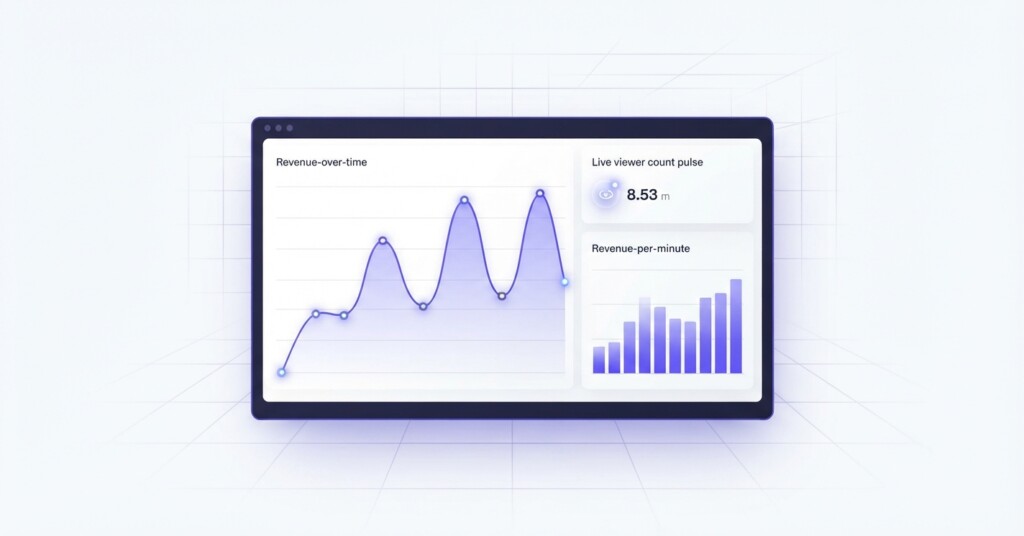
TikTok Shop Live has changed how e-commerce sellers think about broadcast selling. A single live session can generate thousands of dollars in orders within minutes — but without measuring what actually happened during the broadcast, you are flying blind. Most sellers look at total session revenue and call it a win or a loss. The sellers who consistently grow their live commerce revenue do something different: they break the broadcast into segments, measure revenue per minute, track conversion events in real time, and use that data to make better decisions about hosts, products, timing, and promotional mechanics.
This article walks through how to extract meaningful financial performance data from TikTok Shop Live Analytics, how to calculate revenue per minute and segment profitability, and how to use that analysis to improve both your broadcast strategy and your overall channel margins.
Why Revenue Per Minute Is the Right Live Commerce Metric
Traditional e-commerce analytics are session-based. You measure traffic, conversion rate, average order value, and revenue over a day or a week. Live commerce is fundamentally different — it is time-compressed selling where audience attention, product presentation, promotional mechanics, and host energy all interact within a window that may last two to four hours.
Revenue per minute (RPM) treats each broadcast segment as its own micro-performance unit. Rather than asking ‘did this session make money?’, you ask ‘which ten-minute window generated the most revenue, and why?’ That question leads directly to actionable changes.
Revenue Per Minute Formula: Total Segment Revenue ÷ Segment Duration in Minutes. For example, if your 20-minute hero product segment generated $3,400 in orders, your RPM for that segment is $170. Compare this across all segments in a session to find your most productive broadcast windows.
RPM also lets you compare sessions that ran for different lengths of time. A four-hour session generating $8,000 has an average RPM of $33.33. A two-hour focused session generating $5,000 has an average RPM of $41.67. The shorter session was more efficient — and that is the kind of insight that changes how you plan your next broadcast.
What TikTok Shop Live Analytics Actually Shows You
TikTok Shop’s seller centre provides post-session analytics that include concurrent viewer counts over time, total GMV (gross merchandise value), orders placed, clicks on pinned products, and average watch time. During a live session, the host dashboard shows real-time viewer numbers and a running order count. To build segment-level analysis, you need to combine these platform data points with your own timestamped records.
The key analytics outputs to export after each session are: peak and average concurrent viewers by time window, total orders and GMV by product, product click-through rate from the pin shelf, and session duration. TikTok Shop also provides an order-level export in the seller centre which, when cross-referenced with timestamps, allows you to reconstruct exactly when orders were placed.
For sellers running across multiple channels — Shopify, Shopee, Lazada, and TikTok Shop — the live session data sits in isolation unless you actively pull it into your wider analytics framework. That disconnection is one of the primary reasons multi-channel operators underestimate or overestimate live commerce contribution to overall profitability.
Building a Segment Map for Every Broadcast
Before you can measure segment performance, you need to define your segments. A broadcast segment is any distinct phase of the live session with its own purpose — product focus, audience interaction, promotional mechanic, or host-driven content.
A typical two-hour TikTok Shop Live session for a beauty brand might look like this:
| Segment | Time Window | Duration (Mins) | Purpose | Products Featured |
|---|---|---|---|---|
| Warm-up | 7:00 – 7:15 PM | 15 | Build audience, introduce host | None |
| Hero Launch | 7:15 – 7:35 PM | 20 | Primary product push with limited coupon | Serum Bundle |
| Testimonial | 7:35 – 7:50 PM | 15 | Social proof, Q&A, hold audience | Serum Bundle |
| Upsell Segment | 7:50 – 8:10 PM | 20 | Cross-sell complementary products | Moisturiser + SPF Kit |
| Flash Deal | 8:10 – 8:25 PM | 15 | Urgency mechanic, countdown voucher | Serum Bundle (restocked) |
| Wind-down | 8:25 – 9:00 PM | 35 | Repeat offers, follower conversion | Mixed catalogue |
Once you have your segment map, you collect order data from the TikTok Shop order export and assign each order to a segment based on its timestamp. This gives you the raw revenue figure for each segment. You then divide by segment duration to get RPM.
Calculating Segment Revenue Per Minute: A Worked Example
Using the session structure above, here is how the revenue per minute analysis might look for a session that generated $6,800 in total GMV:
| Segment | Duration (Mins) | Segment GMV | RPM | % of Total GMV |
|---|---|---|---|---|
| Warm-up | 15 | $180 | $12.00 | 2.6% |
| Hero Launch | 20 | $2,600 | $130.00 | 38.2% |
| Testimonial | 15 | $420 | $28.00 | 6.2% |
| Upsell Segment | 20 | $1,100 | $55.00 | 16.2% |
| Flash Deal | 15 | $1,950 | $130.00 | 28.7% |
| Wind-down | 35 | $550 | $15.71 | 8.1% |
The data tells a clear story. The Hero Launch and Flash Deal segments each generated $130 RPM — more than eight times the RPM of the warm-up and wind-down periods. The upsell segment performed solidly at $55 RPM, while the testimonial period held the audience without generating strong direct revenue.
The 35-minute wind-down generated only $550 at $15.71 RPM. For this session, the final third of the broadcast was the least efficient use of broadcast time. A logical decision would be to shorten the wind-down, move the flash deal later to capture peak engagement, or restructure the format to run two flash deal cycles.
Moving From Revenue to Segment Profitability
RPM measures revenue efficiency. But revenue without margin context can mislead you. The flash deal segment generated strong RPM — but if the serum bundle was sold at a 15% discount with an additional platform voucher absorbing another 10%, the gross profit on that segment may be significantly lower than the hero launch segment where the product sold at full price.
To measure segment profitability, you need to layer in product costs, voucher redemptions, and platform fees. For each segment, the calculation looks like this:
| Segment GMV (total orders at listed price) | $2,600.00 |
| Less: Vouchers and discounts redeemed | -$390.00 |
| Net revenue received | $2,210.00 |
| Less: TikTok Shop commission and payment fees (est. 8%) | -$176.80 |
| Less: Cost of goods sold (products shipped) | -$780.00 |
| Less: Fulfilment and shipping costs | -$210.00 |
| Segment Gross Profit | $1,043.20 |
Running this calculation across each segment gives you a profitability map of the broadcast — not just a revenue map. You may find that your highest RPM segment is not your highest gross profit segment, particularly when heavy vouchers are deployed on hero products.
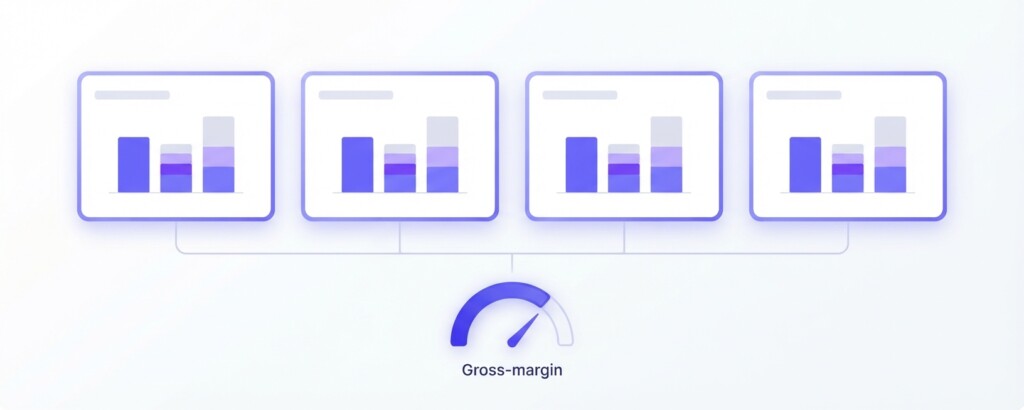
A common mistake is optimising for total session GMV without accounting for voucher costs. TikTok Shop platform vouchers are often subsidised partially by the seller. If you are deploying heavy vouchers across your highest-volume segments, your gross profit margin on those segments may be substantially below your catalogue average. Always reconcile net revenue against platform payouts, not GMV figures, when calculating true segment profitability.
Identifying Your Most Profitable Broadcast Patterns Over Time
A single session analysis is useful. Analysis across ten or twenty sessions becomes genuinely strategic. When you track segment RPM and segment gross profit consistently, patterns emerge that are not visible from individual session reviews.
Common patterns that multi-session analysis reveals include: which product categories consistently outperform on live versus your Shopify or Shopee channels; whether morning or evening sessions produce better margin per minute; how audience size correlates with conversion rate rather than just with revenue; and which host or co-host combinations drive stronger upsell segment performance.
- Export TikTok Shop order data after every session and tag each order with session ID and approximate segment timestamp.
- Build a session tracker in a spreadsheet that records: session date, total duration, peak viewers, total GMV, total net revenue, total gross profit, and average RPM.
- Add segment-level rows for each defined broadcast phase, recording GMV, voucher cost, and estimated gross profit per segment.
- After five sessions, calculate average RPM and average gross profit margin by segment type across all sessions.
- Identify the two or three segment formats that consistently deliver the highest gross profit per minute and rebuild your broadcast structure around them.
- Compare TikTok Shop live gross profit margins against your Shopee and Shopify channel margins for the same products to understand true channel contribution.
Connecting Live Commerce Performance to Multi-Channel Profitability
TikTok Shop Live does not operate in a vacuum. Sellers running across Shopify, Shopee, Lazada, and TikTok Shop need to understand whether live commerce is generating incremental profitable revenue or cannibalising higher-margin sales from other channels.
A product selling at a 64% gross margin on Shopify at full price may only achieve a 43% gross margin during a TikTok Shop Live flash deal after accounting for vouchers, platform commissions, and logistics. If the live session is converting customers who would otherwise have purchased on Shopify, net profitability across the business may be declining even as TikTok GMV figures grow.
| Channel | Product | Selling Price | Voucher/Discount | Platform Fee | COGS | Gross Profit | Gross Margin % |
|---|---|---|---|---|---|---|---|
| Shopify (direct) | Serum Bundle | $85.00 | $0 | $2.55 (3%) | $28.00 | $54.45 | 64.1% |
| Shopee (standard) | Serum Bundle | $79.00 | $7.90 (10%) | $5.53 (7%) | $28.00 | $37.57 | 47.6% |
| TikTok Shop Live (flash) | Serum Bundle | $72.25 (15% off) | $7.22 (10% voucher) | $5.78 (8%) | $28.00 | $31.25 | 43.3% |
| Lazada (standard) | Serum Bundle | $77.00 | $3.85 (5%) | $5.39 (7%) | $28.00 | $39.76 | 51.6% |
This comparison shows that TikTok Shop Live flash deals, while driving strong volume and high RPM, produce the lowest gross margin of any channel. The strategic question is whether the volume uplift justifies the margin compression — and the answer depends on your fixed cost base and whether the live session is genuinely acquiring new customers rather than shifting existing ones.
Tools like BrizoMarket can help multi-channel operators consolidate this kind of cross-channel profitability data into a single view, making it easier to compare channel margins and identify where live commerce is genuinely additive versus where it is simply redistributing the same customer spend at lower margins.
Practical Next Steps for Your Next Live Session
The goal is not to track data for its own sake. The goal is to make better decisions about where you spend broadcast time, which products you push during high-RPM windows, and what promotional mechanics improve profitability rather than just volume.
- Define your segment map before every broadcast and give each segment a clear start and end time.
- Assign a team member to log the timestamp of each product pin change and promotional mechanic activation during the live session.
- Export the TikTok Shop order report within 24 hours of each session and reconcile net payout against GMV to capture true voucher costs.
- Calculate RPM and gross profit for each segment, not just for the session as a whole.
- Track your ‘best segment’ across multiple sessions to identify your most reliably profitable broadcast format.
- Compare live commerce margins against your other active channels quarterly to understand net contribution to business profitability.
Live commerce rewards operators who treat each broadcast as a structured financial event, not a spontaneous content moment. The sellers who grow live revenue profitably are the ones who know, down to the minute, what their broadcast time is actually worth.
Track Live Commerce Profitability Across All Your Channels
BrizoMarket helps multi-channel e-commerce operators consolidate revenue, margin, and cost data from TikTok Shop, Shopify, Shopee, Lazada and more — so you can see exactly where your most profitable sales are coming from.