How to Use Shopee Seller Centre Advertising Reports to Calculate the True ROAS for Each Ad Type and Reallocate Budget to Your Most Profitable Campaigns
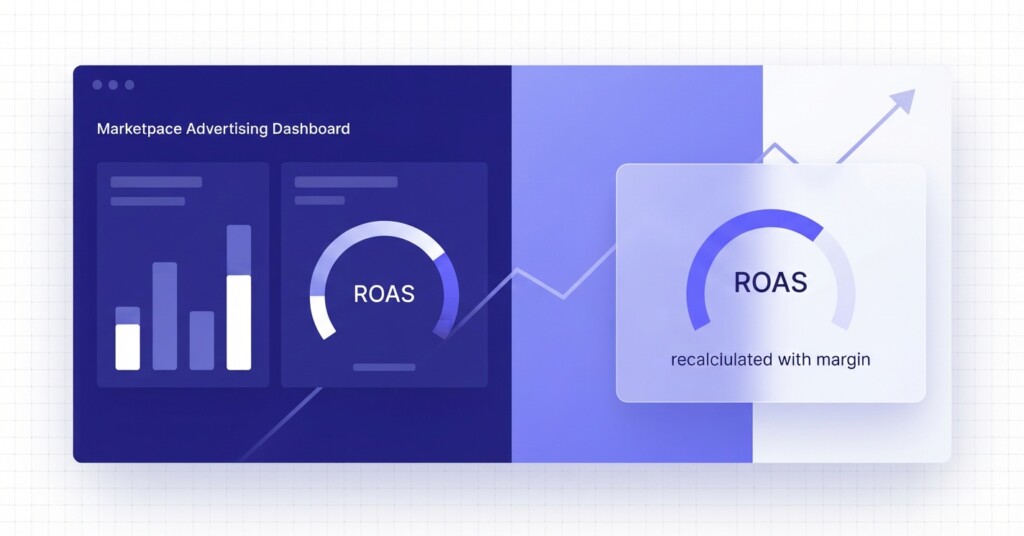
If you are running ads on Shopee, you are probably looking at the ROAS figure inside Seller Centre and using it to decide where to put your next dollar. The problem is that Shopee’s reported ROAS is not the same as your true ROAS — and the gap between the two can be wide enough to completely reverse which campaigns you think are working.
This article walks through how to extract the right data from Shopee Seller Centre’s advertising reports, build a true ROAS calculation for each ad type, and use that number to make smarter budget decisions across your campaigns.
Why Shopee’s Reported ROAS Is Not Enough
Shopee Seller Centre reports ROAS as total attributed sales divided by total ad spend. That sounds simple enough — but there are two problems with relying on it alone.
First, the attributed sales figure includes orders that may not have been driven purely by the ad. Shopee uses a 7-day click-based attribution window, meaning any purchase made within seven days after a click is counted as a sale from that ad, even if the buyer would have found your product anyway through search or a voucher campaign.
Second, and more importantly for profitability, ROAS says nothing about margin. A campaign with a reported ROAS of 6x on a product with a 15% gross margin is far less profitable than a campaign with a ROAS of 3x on a product with a 55% gross margin. Without factoring in your actual margin per product, you cannot know whether your advertising spend is generating profit or eroding it.
True ROAS should answer the question: ‘For every dollar I spend on ads, how much gross profit am I generating?’ Platform-reported ROAS only answers: ‘How much revenue did the platform attribute to my ads?’ These are very different questions.
Understanding Shopee’s Three Main Ad Types
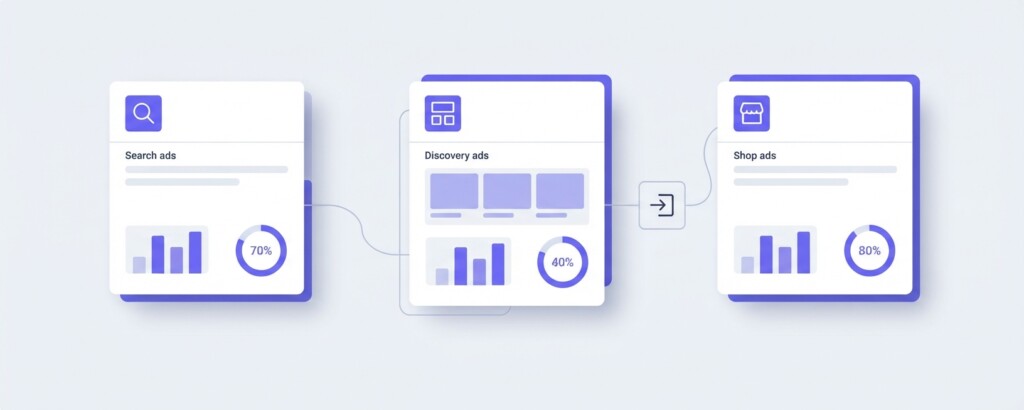
Before pulling your reports, it helps to know what you are measuring. Shopee’s advertising ecosystem has three primary on-platform ad types, each with different mechanics and cost structures.
- Search Ads (keyword-based): You bid on keywords and pay per click (CPC). These ads appear in search results and are the most intent-driven format on the platform.
- Discovery Ads (product-based): Also CPC, but placement is algorithm-driven across high-traffic recommendation sections such as Daily Discover and You May Also Like. Broader reach, lower purchase intent.
- Shop Ads: Promote your entire shop at the top of search results rather than individual products. Charged on a CPC basis, useful for building followers and brand visibility but harder to attribute to specific product revenue.
Each ad type can be monitored inside Seller Centre under Marketing Centre > Shopee Ads. You can filter by date range, switch between ad type tabs, and click the ‘Export Data’ button. Download these reports for each type separately — do not combine them into a single blended view before exporting, or you will lose the granularity you need.
Step-by-Step: Building Your True ROAS Calculation
Here is the process to follow. It requires combining data from two sources: Shopee’s advertising reports and your own product margin data.
- Export your advertising reports from Seller Centre: Go to Marketing Centre > Shopee Ads. Select your ad type tab (Search Ads, Discovery Ads, or Shop Ads) and click ‘Export Data’. Set the date range to at least 30 days for statistical reliability.
- Match attributed sales back to specific products: Search Ad reports break down by keyword and product SKU. Discovery Ads report by product. Use the product-level data to match attributed revenue to individual SKUs.
- Pull your cost of goods sold (COGS) and Shopee fees for each SKU: You need your landed cost per unit, plus Shopee’s commission rate for that product category and any fulfilment or logistics fees. If you use Shopee-supported logistics, check the actual per-order shipping cost in your order reports.
- Calculate gross profit per attributed sale: Gross Profit = Selling Price — COGS — Shopee Commission — Fulfilment Cost.
- Calculate true ROAS by campaign: True ROAS = Total Gross Profit from Attributed Sales ÷ Total Ad Spend for that campaign.
A Worked Example: Search Ads vs Discovery Ads
Consider a seller running both Search Ads and Discovery Ads for a skincare product priced at RM 89. Here is how the two ad types compare using Shopee’s reported ROAS versus true ROAS.
| Metric | Search Ads | Discovery Ads |
|---|---|---|
| Attributed Revenue (30 days) | RM 12,460 | RM 18,900 |
| Ad Spend | RM 1,560 | RM 3,150 |
| Shopee Reported ROAS | 7.99x | 6.0x |
| Units Sold (attributed) | 140 | 212 |
| Selling Price per Unit | RM 89 | RM 89 |
| COGS per Unit | RM 28 | RM 28 |
| Shopee Commission (8%) | RM 7.12 | RM 7.12 |
| Fulfilment Cost per Unit | RM 4.50 | RM 4.50 |
| Gross Profit per Unit | RM 49.38 | RM 49.38 |
| Total Gross Profit (attributed) | RM 6,913 | RM 10,469 |
| True ROAS (GP ÷ Spend) | 4.43x | 3.32x |
| Profit After Ad Spend | RM 5,353 | RM 7,319 |
On the surface, Discovery Ads looks attractive — higher attributed revenue and not far behind on reported ROAS. But once you factor in margin, Search Ads returns RM 4.43 of gross profit per RM 1 spent, versus RM 3.32 for Discovery Ads. The true profitability gap is meaningful, even though Discovery Ads generated more absolute gross profit due to higher volume.
This is where the budget reallocation question becomes interesting. If your goal is to maximise return per ad dollar, Search Ads wins clearly. If your goal is to maximise total profit and you have budget to spare, Discovery Ads is still worth running — just at a lower allocation.
What a Minimum Profitable ROAS Looks Like
Before reallocating budget, you need to understand your break-even thresholds. For True ROAS (Gross Profit ÷ Ad Spend), the break-even floor is always 1.00x: any figure above 1.00x generates net profit after ad spend, while any figure below 1.00x loses money. To calculate the minimum platform-reported ROAS required to break even, divide 1 by your product’s gross margin percentage.
| Selling Price | RM 89.00 |
| Less: COGS | – RM 28.00 |
| Less: Shopee Commission (8%) | – RM 7.12 |
| Less: Fulfilment Cost | – RM 4.50 |
| Gross Profit per Unit | RM 49.38 |
| Gross Margin % | 55.5% |
| Break-Even Reported ROAS (1 ÷ Gross Margin) | 1.80x |
A break-even reported ROAS of 1.80x means that if Shopee’s dashboard ROAS drops below 1.80x, your gross profit will fail to cover your ad spend. In terms of True ROAS, break-even is 1.00x. For this product, both Search Ads (True ROAS of 4.43x; reported 7.99x) and Discovery Ads (True ROAS of 3.32x; reported 6.0x) sit comfortably above break-even. However, if you sold a product with only a 25% gross margin, your break-even reported ROAS would jump to 4.00x (1 ÷ 0.25). A campaign reporting a 3.50x ROAS might look acceptable at first glance, but at a 25% margin its True ROAS would be just 0.88x (3.50 × 25%), making it unprofitable.
Never set target ROAS based on a blended margin across all your products. Each product has a different gross margin, which means each product has a different break-even ROAS. A campaign promoting a mix of high-margin and low-margin SKUs can show a healthy average ROAS while the low-margin products are actively destroying profitability.

How to Reallocate Budget Based on True ROAS
Once you have true ROAS calculated per campaign and per ad type, the reallocation logic is straightforward. Use this decision framework:
| True ROAS vs Break-Even | Recommended Action |
|---|---|
| True ROAS > 2.0x (2× Break-Even) | Scale budget. This campaign is highly profitable. |
| True ROAS between 1.0x and 2.0x | Maintain or test incrementally. Profitable but not exceptional. |
| True ROAS at or near Break-Even (1.0x) | Pause and investigate. Check whether attributed sales are genuinely incremental. |
| True ROAS below Break-Even (< 1.0x) | Pause or restructure. Negative contribution margin per ad dollar. |
| Shop Ads with no SKU-level attribution | Assign a fixed monthly budget cap and monitor follower growth, not direct ROAS. |
When scaling a high-performing campaign, increase the daily budget by 20–30% at a time and monitor ROAS over the following 7 days before scaling again. Aggressive budget increases on Shopee’s auction-based system can push your average CPC up quickly, which will reduce your true ROAS even if attributed revenue grows.
Accounting for Attribution Overlap Across Channels
If you are selling the same products across Shopee, Lazada, TikTok Shop and Shopify, there is another layer of complexity. A buyer might see your product through a TikTok Shop ad, search for it on Shopee, click a Shopee Search Ad, and complete the purchase — with Shopee claiming the full attributed sale and TikTok Shop claiming none.
There is no perfect solution to cross-channel attribution, but a practical workaround is to track overall channel revenue and overall channel ad spend separately for each platform, then calculate a channel-level true ROAS. Compare this across platforms monthly to understand which channels are genuinely profitable versus which are benefiting from attribution inflation.
Tools like BrizoMarket can connect your Shopee, Lazada, TikTok Shop and Shopify data into a single view, so you can see true contribution margin and advertising efficiency across all channels without manually consolidating CSV exports. This becomes particularly valuable when you are running concurrent promotions on multiple platforms and need to understand where profit is actually coming from.
Common Mistakes in Shopee Ad Reporting
- Using blended ROAS across all ad types: Search Ads and Discovery Ads have different mechanics. Averaging them obscures where your budget is working.
- Ignoring Shopee’s voucher cost when calculating margin: If you are funding Shopee vouchers or coin cashbacks as part of a campaign, that cost needs to come out of your gross profit before calculating true ROAS.
- Treating all attributed sales as incremental: Some portion of attributed sales would have happened without the ad. If your organic ranking is strong, your true incremental ROAS may be lower than the reported figure.
- Optimising for ROAS on low-volume campaigns: A campaign with 5 attributed sales and a 10x ROAS is statistically meaningless. Set a minimum of 30 attributed orders before drawing conclusions.
- Not separating new customer sales from repeat buyer sales: Repeat buyers often have higher conversion rates and may inflate ROAS for campaigns that are not actually driving new demand.
Building a Monthly Ad Review Process
Rather than reacting to ROAS fluctuations daily, build a structured monthly review using the following checklist. This creates a consistent process rather than ad-hoc decisions.
- Export ad performance reports from Marketing Centre > Shopee Ads for the previous 30 days.
- Match attributed sales to SKUs and calculate gross profit per SKU using current COGS and Shopee fee rates.
- Calculate true ROAS for every active campaign.
- Compare true ROAS against the 1.0x break-even floor and check reported ROAS against product-level break-even ROAS.
- Identify your top three campaigns by true ROAS and scale each by 20% budget increase.
- Identify campaigns below break-even ROAS and pause or restructure keyword targeting.
- Review CPC trends — if CPC has risen more than 15% month-on-month, check whether ROAS has held or declined.
- Document decisions and reasoning so you can track the impact in next month’s review.
The Bottom Line
Shopee’s advertising reports give you the raw material you need — but the platform’s own ROAS figure is a starting point, not a decision-making tool. By adding your product margin data, Shopee fees and fulfilment costs to the calculation, you can convert a surface-level metric into a genuinely useful profitability signal.
The sellers who consistently outperform on Shopee are not necessarily spending more. They are spending with more precision — running their highest-spend campaigns on the products and ad types where their true ROAS is strongest, and cutting back on campaigns that look good on the dashboard but do not survive margin scrutiny.
Start with your top five campaigns by spend. Run the true ROAS calculation for each. The results will almost certainly surprise you, and they will give you a clear signal about where to put your next dollar.
See Your True ROAS Across Every Sales Channel
BrizoMarket connects your Shopee, Lazada, TikTok Shop and Shopify data so you can calculate true contribution margin and advertising efficiency across all your channels in one place — without the manual spreadsheet work.